 English
 عربى
 简体中文

Two air cooled condensers can carry the same nominal capacity and still be different machines — one built to hold performance for fifteen years in a dusty inland plant, the other built to hit a price point on a tender.
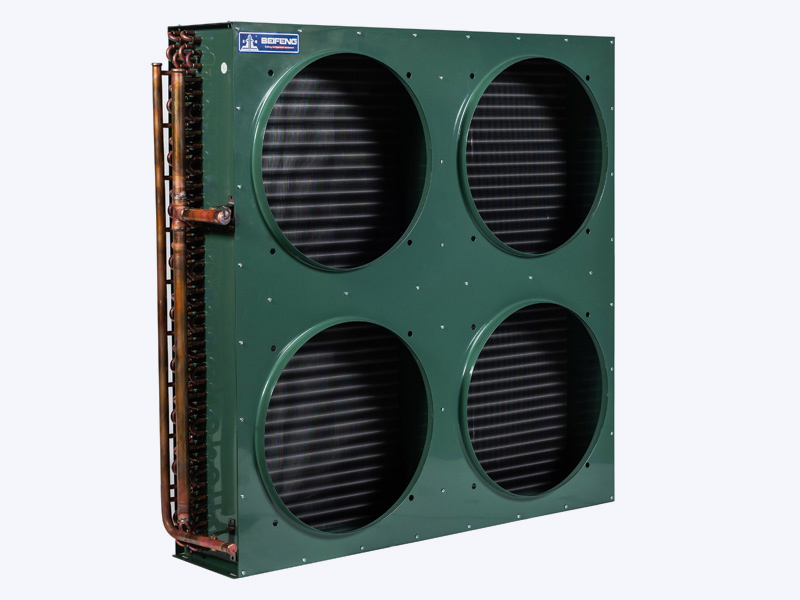
Construction is what separates them. Tube diameter, fin pitch, coil rows, fan arrangement, casing gauge, coating system, and the working room a technician gets when the coil finally needs cleaning. None of those appear in a single capacity figure, yet all of them decide the condensing temperature you actually reach on a hot afternoon and the maintenance budget you inherit afterwards.
The notes below are written from the perspective of specifying and building refrigeration condensers, not from the perspective of reading a sales sheet.
What Air Cooled Condenser Construction Actually Covers
A refrigeration condenser is a small number of components doing a large number of jobs: it rejects heat, holds refrigerant inside a pressure boundary, survives weather, and stays cleanable. Construction is the sum of the choices made to balance those jobs against cost.
- Coil: tube diameter and wall thickness, row count, circuiting, fin pitch and fin type
- Air side: fan diameter, blade geometry, motor type, and whether the fan pushes or pulls
- Structure: casing gauge, frame rigidity, fan deck, lifting points and mounting feet
- Surface protection: galvanising, powder coating, or a baked coating over the fins
- Connections: header design, inlet and outlet positions, subcooling circuit if fitted
- Service features: removable panels, coil access, drain provisions, and clearance for a brush or a pressure washer
| Construction decision | Common options | What it changes |
|---|---|---|
| Tube diameter and wall | 7 mm, 9.52 mm, 12.7 mm; wall from roughly 0.35 mm to 0.7 mm | Internal volume and refrigerant charge, pressure drop, and burst margin |
| Fin pitch | About 1.8 mm to 2.5 mm | Surface area against fouling rate, cleaning interval, and fan power |
| Coil rows | One to four, occasionally six | Air-side pressure drop, footprint, and how deep dirt can travel |
| Fan arrangement | Forced draft (blowing) or induced draft (drawing) | Air distribution across the face, recirculation risk, motor heat load |
| Casing and frame | Galvanised steel, powder-coated steel, stainless | Corrosion life, weight, rigidity under fan vibration |
| Coating system | Bare aluminium fin, e-coat, baked phenolic | Coastal and washdown durability, with a small heat transfer penalty |
Coil Geometry Sets Capacity, Pressure Drop, and the Cleaning Bill
Capacity is not a number a manufacturer chooses; it is what remains after the coil geometry and the airflow have been fixed. A condenser selected on a 5 K approach temperature needs roughly a fifth more face area than the same duty selected on 8 K, and that extra area has to go somewhere — more rows, a wider casing, or a taller unit.
Tube and fin decisions worth writing into the order
Fin thickness between about 0.105 mm and 0.15 mm sounds trivial until the coil is pressure-washed twice a year; thin fins deform and blank off airflow. Mechanical tube expansion gives reliable fin-to-tube contact, while brazed or welded fin packs trade some heat transfer for higher temperature tolerance. Tube wall thickness is a pressure question, not a thermal one, and it should be stated explicitly rather than assumed from a catalogue drawing.
Forced draft and induced draft
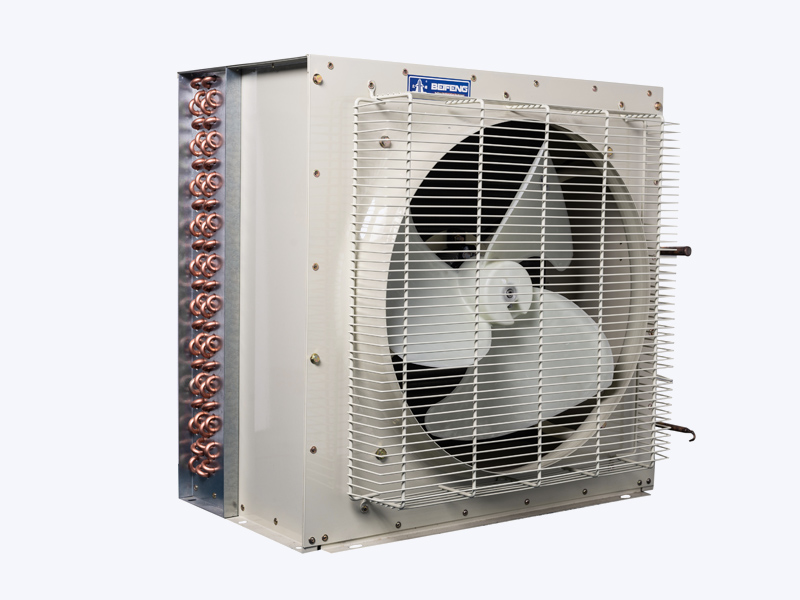
Forced draft units blow air through the coil, which distributes air evenly and keeps the fan motor in the cool stream, but they push dust into the fin pack. Induced draft units pull air through and keep the coil face cleaner in dirty environments, at the cost of the motor sitting in the hot exhaust. On larger industrial and power-generation condensers, the induced draft A-frame with finned tube bundles and a steam distribution manifold is standard construction, because the exhaust volume is enormous and the vacuum side cannot tolerate uneven air distribution.
The coil is the part of the condenser nobody photographs and the only part that decides whether the unit still holds its rating in year eight.
Casing, Fan Deck, and the Details Nobody Prices In
Casing gauge is where cost reductions are easiest and consequences are slowest to appear. A 1.5 mm panel will hold a fan, but a 2.0 mm panel holds a fan without drumming, and it holds a service technician without deforming. On units installed on roofs or steel frames, the frame stiffness also governs whether the fan blades keep their tip clearance after two seasons of vibration.
Fan selection matters just as much. A larger fan turning slowly moves the same air as two small fans turning fast, at lower noise and lower power. Electronically commutated motors with speed control let the condenser track ambient temperature instead of cycling, which stabilises condensing pressure and reduces compressor load. What the construction must then provide is a fan deck rigid enough for the motor mount and a guard that opens without tools.
Siting belongs to the same conversation. A condenser pushed against a wall or into a corner recirculates its own hot discharge, and no amount of coil area compensates for air entering the face at 45 °C when the ambient is 32 °C.
Materials and Coatings by Environment
- Inland, dry, low-dust sites: standard aluminium fins with galvanised casing usually perform well for a full service life
- Coastal or high-humidity sites: coated fins and powder-coated or stainless casing, with attention to cut edges and fixings
- Food processing and washdown areas: smooth surfaces, sealed panel joints, and coatings that tolerate alkaline cleaners
- Cold climates: drain paths and fan control designed for freeze protection rather than added later
Pressure integrity is part of construction, not a separate subject. Helium leak testing of condensers and evaporators before shipment, plus a documented pressure test, catches the joint that would otherwise fail two months after commissioning in a plant where the refrigerant charge is measured in hundreds of kilograms.
How Construction Shows Up in Maintenance
Most condenser complaints that reach a supplier are not thermal failures. They are access failures. A coil that cannot be reached cannot be cleaned, and a coil that cannot be cleaned loses capacity steadily until someone decides the unit is undersized.
- Is there a removable panel giving straight-line access to the full coil face?
- Can the fan guard be opened without removing the fan assembly?
- Are headers and connections positioned so a gauge manifold reaches them?
- Is there a defined cleaning direction, and does the fin pattern resist bending in that direction?
Practical selection guidance on these points is worth reading before the purchase order is signed, not after the first summer.
Matching Construction to the Application
The same coil principles apply across applications, but the priorities shift. In retail refrigeration the constraint is noise and part-load efficiency; in industrial cooling it is continuous duty and service access; in cold room and small plant work it is footprint and price per kilowatt.
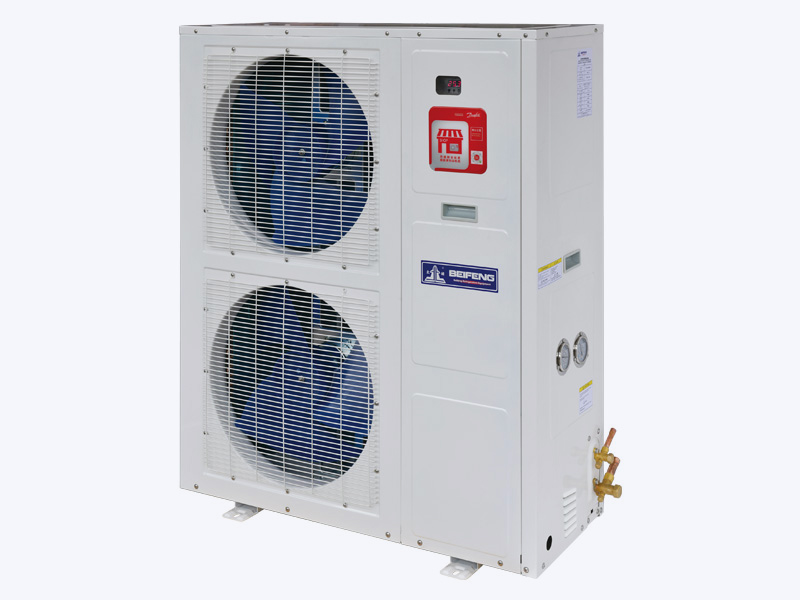 Medium-Temperature Inverter Condensing Unit for Retail RefrigerationInverter-driven medium-temperature condensing unit for retail refrigeration, using a Danfoss scroll compressor and variable-speed fan to support quieter part-load operation.View Product →
Supermarket and convenience retail
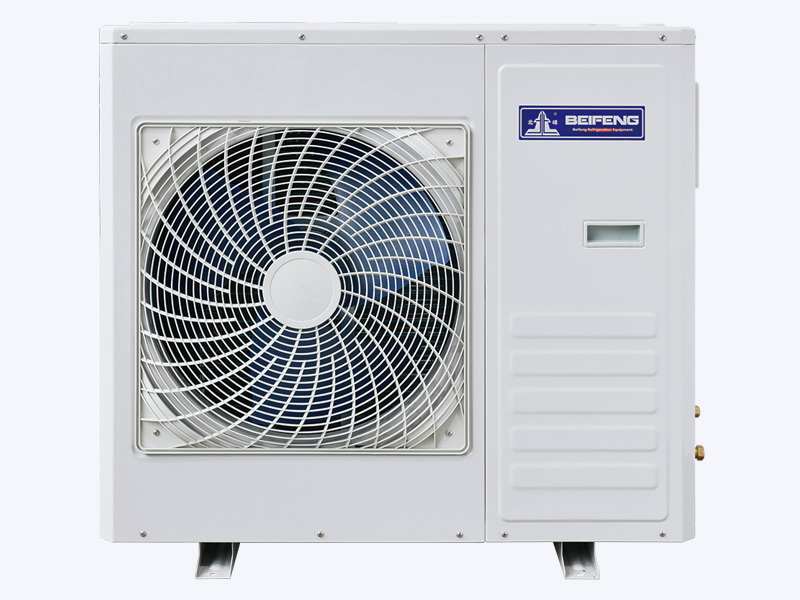
Here the condenser sits near people, so fan noise and enclosure construction carry the same weight as capacity. An inverter-driven medium temperature condensing unit lets the fan and compressor trim to the display case load overnight, which flattens the condensing pressure swing and keeps the store quiet. Casing rigidity and mounting isolation do more for noise complaints than any acoustic add-on.
Industrial process cooling
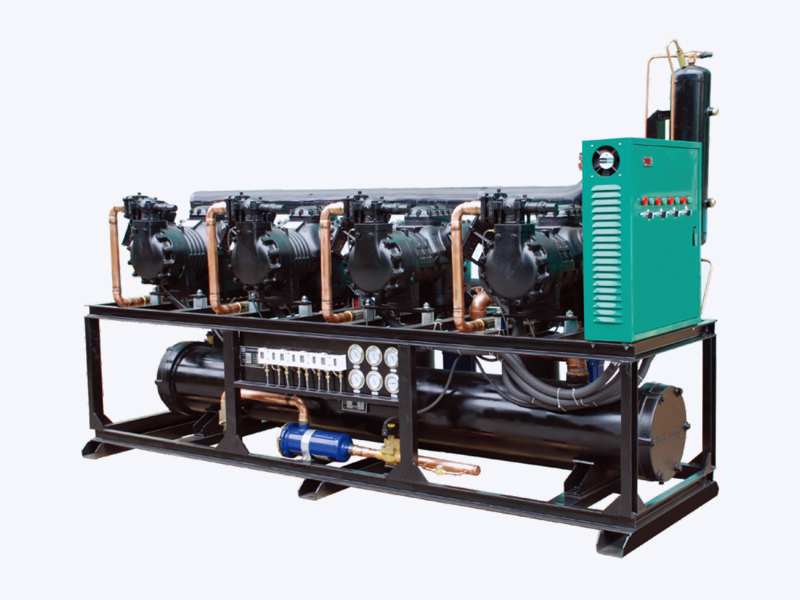
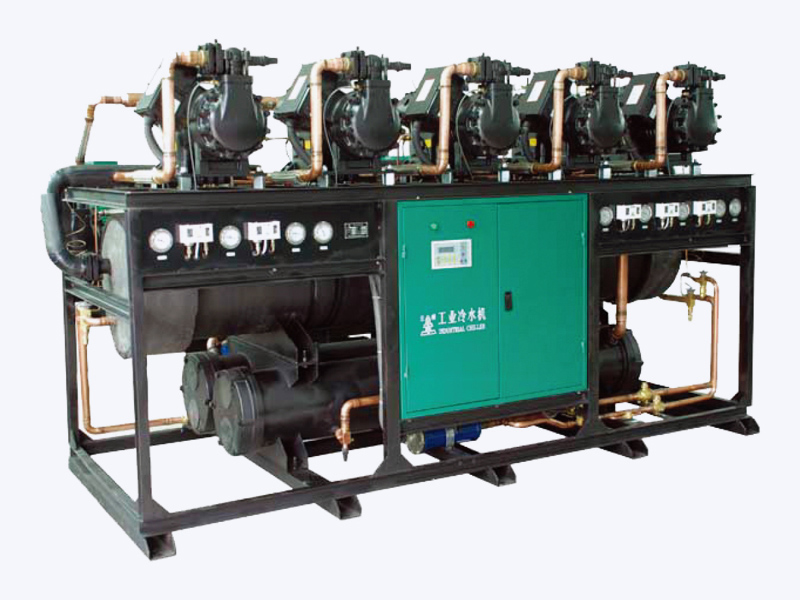
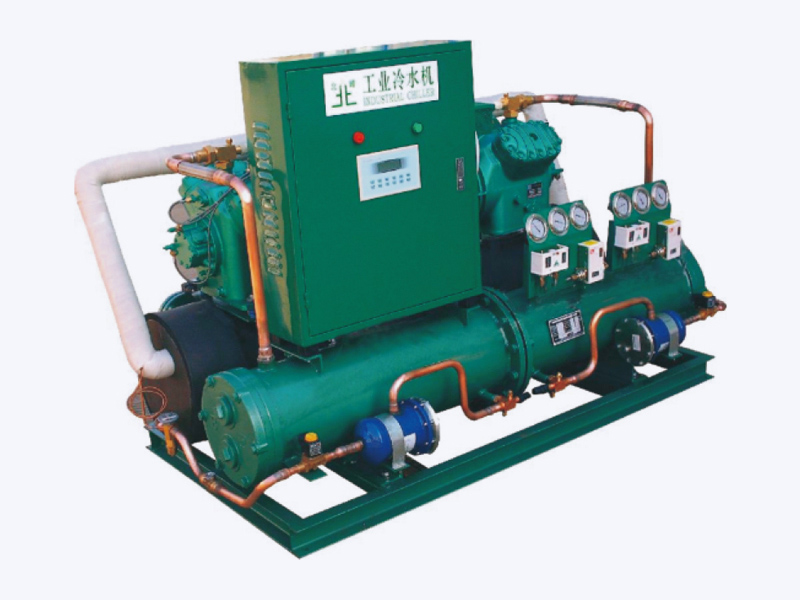
For process water and equipment cooling, the condenser is part of a chiller package running continuously. Coil access, tube wall thickness, and motor quality decide uptime. A semi-hermetic industrial chiller built around a serviceable compressor and an accessible condenser coil is a different asset from a sealed package that has to be moved to a workshop for repairs.
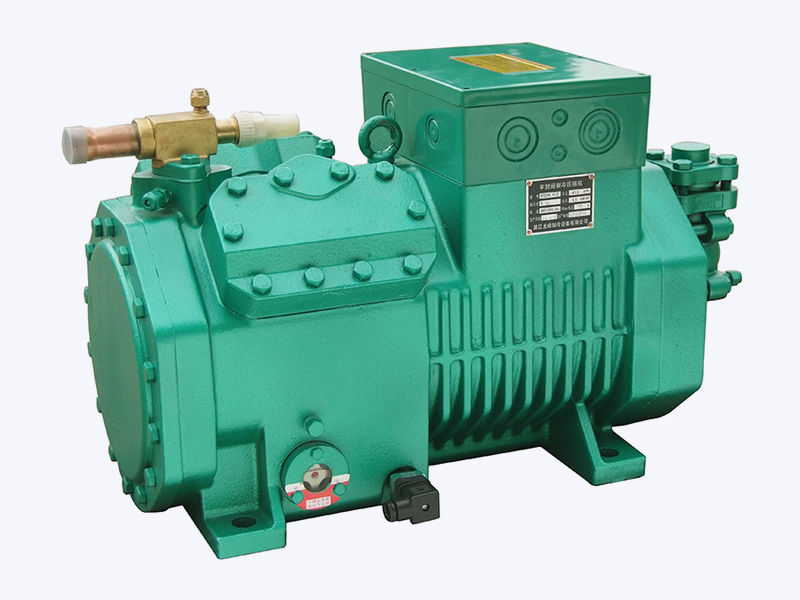
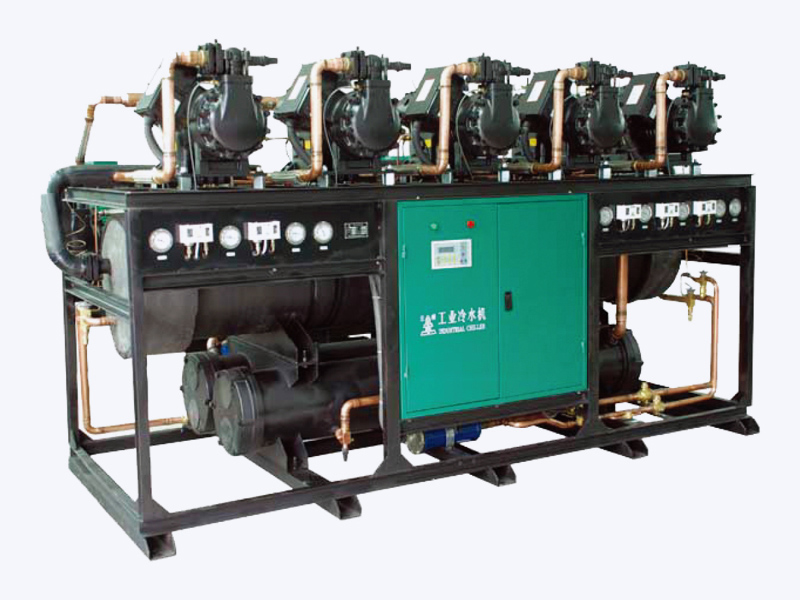 Semi-Hermetic Air- and Water-Cooled Industrial ChillerAir- and water-cooled industrial chiller with semi-hermetic piston compressors, suited to continuous process-water and equipment-cooling duties.View Product →
Cold rooms, small plants, and packaged systems
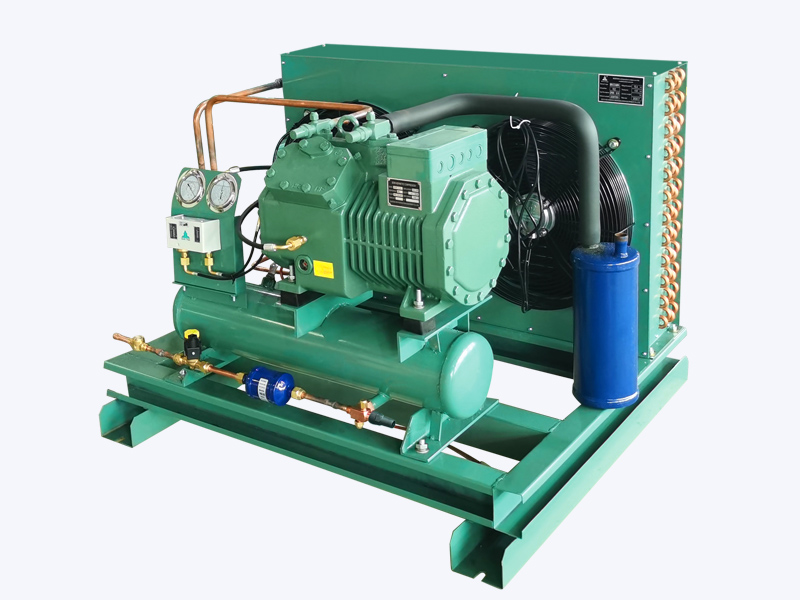
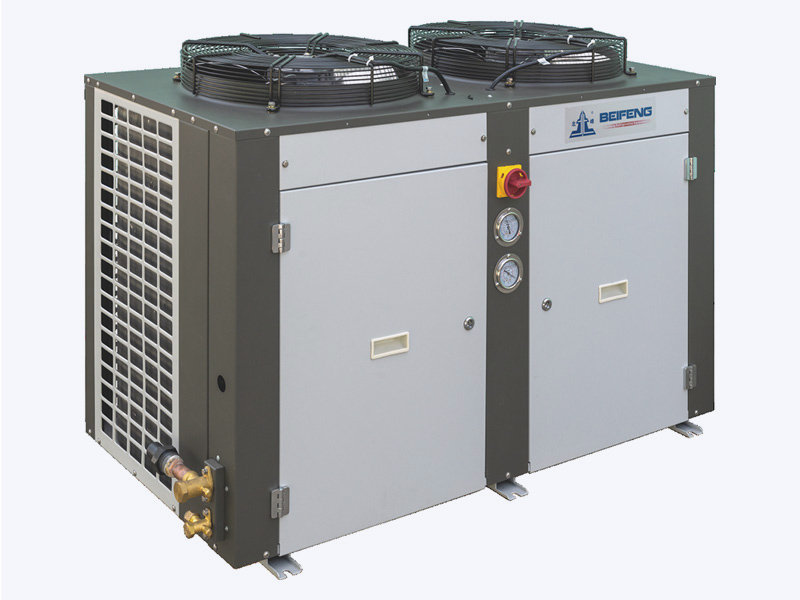
In smaller installations the air cooled condensing unit is bolted to a wall or a frame, and its construction determines how easily it is charged, cleaned, and eventually replaced. Wide fin spacing pays for itself in any site with flour, dust, or lint in the air.
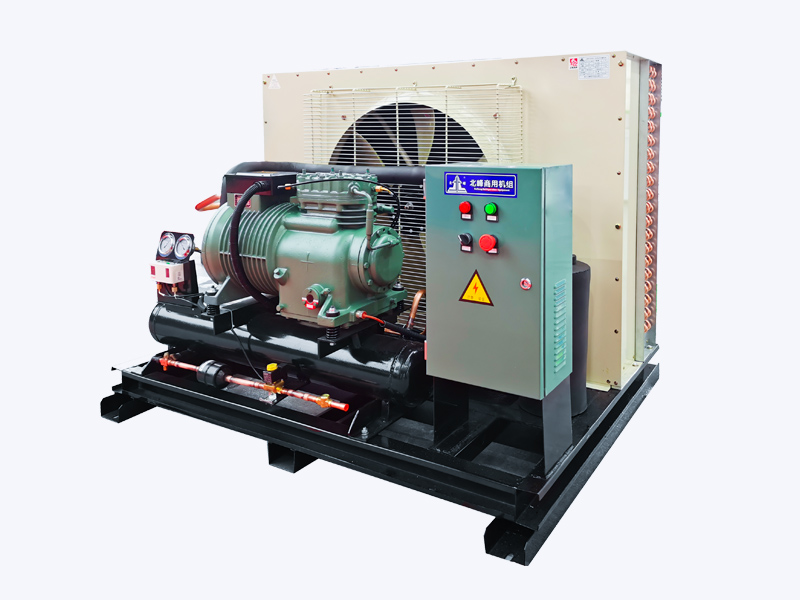
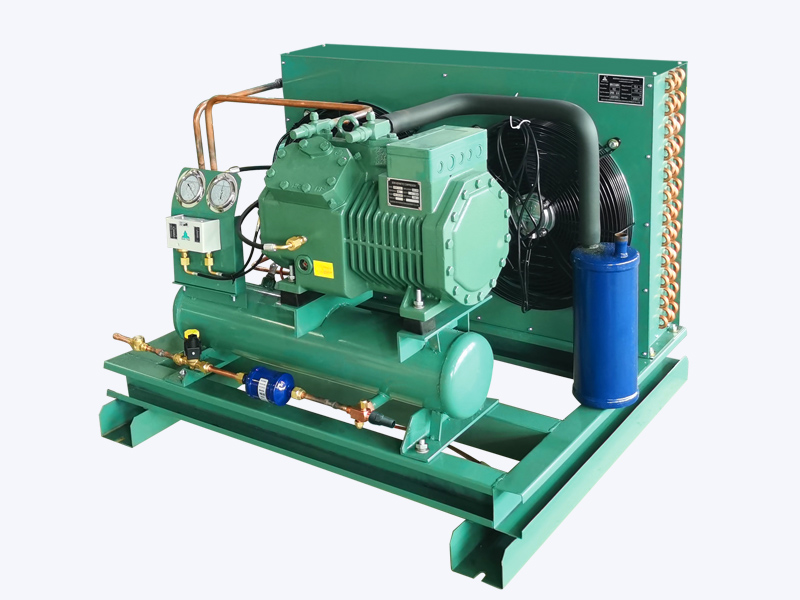 Semi-Hermetic Air-Cooled Condensing Unit, 3HP–25HPMulti-refrigerant air-cooled condensing unit with semi-hermetic compressor, compact construction, and high-efficiency condenser for smaller installation frames.View Product →
A Purchase Checklist for Condenser Construction
- State the design ambient, not just the nominal capacity, and confirm the approach temperature used
- Fix the fin pitch in writing, based on how dirty the site really is
- Ask for tube diameter, wall thickness, and row count on the drawing
- Confirm casing gauge and the coating system, including fixings and cut edges
- Check fan arrangement, motor type, and whether speed control is included
- Review the service access before approving the layout, not after delivery
Info. A condenser quoted at a lower capacity for the same footprint usually reflects a tighter fin pitch or fewer rows — ask which, and what it costs in cleaning frequency.
Warning. Recirculation is a construction problem disguised as a performance problem. Confirm the minimum clearance to walls, parapets, and adjacent units before the steelwork is welded.
Danger. Never accept a condenser without documented pressure testing and, for critical systems, helium leak detection. A joint that leaks in year one under warranty leaks in year four at your expense.
Success. When the ambient, fin pitch, tube specification, and access requirements are all written down, the comparison between two quotes becomes a comparison of real machines.
Summary
Air cooled condenser construction is a sequence of ordinary decisions — tube size, fin spacing, row count, fan arrangement, casing gauge, coating — each of which trades first cost against capacity, cleaning effort, and service life. The units that disappoint are rarely badly designed; they are designed against the wrong ambient, the wrong dirt level, or an access assumption nobody checked. Getting those four facts onto the specification sheet before the quotation stage is the whole job.
If you are comparing condenser options for a retail, industrial, or cold room project, send the design conditions and site details to our engineering team and we will map them onto a construction that holds up in service rather than on paper.