 English
 عربى
 简体中文

Heat Rejection Engineering
Air Cooled Condenser Design Temperature: The First Number That Decides the System
A cold store condenser was selected on a 33 °C summer average. The site regularly saw 41 °C in late afternoon. By August, the compressor was short-cycling on high-pressure protection, the room temperature drifted, and the installer had returned three times. The coil was not defective. The design temperature was simply wrong.
Few inputs influence an air cooled condenser as much as the temperature it is designed around. That number sets coil area, fan airflow, condensing pressure, refrigerant charge, and whether the system can reject heat on the hottest afternoon of the year. This guide explains how to set it correctly, where the common mistakes hide, and how the choice echoes through the entire refrigeration system.
01 — Why Design Temperature Comes First
The conclusion is straightforward: design temperature sets condenser capacity, and capacity sets physical size and cost. An air cooled condenser rejects heat to ambient air, so its output is defined by the temperature difference between the condensing refrigerant and the surrounding air. Change the assumed air temperature, and the required coil area changes with it.
Set the design temperature too low, and the condenser is undersized. Condensing pressure climbs, the compressor draws more power, and on peak days the system trips on high-pressure protection. Set it too high, and the condenser is oversized; first cost rises, fan energy increases, and low-ambient operation becomes harder to manage. Neither direction is safe by default.
Most air cooled condenser problems are not component failures. They are design temperature decisions made too early and never revisited.
02 — Defining the Ambient: Dry Bulb, Not Wet Bulb
The ambient temperature for an air cooled condenser is always the dry-bulb temperature. Unlike cooling towers or evaporative condensers, an air cooled coil has no evaporative effect; it removes heat only by sensible heating of air. The wet-bulb temperature, which matters so much for water-rejection equipment, is irrelevant here.
The correct figure is the local summer design dry-bulb, normally taken from meteorological records or engineering standards at the 0.4% or 1% annual exceedance level. Then add an adjustment for the actual installation. A condenser placed against a wall, close to a dark roof, or inside a courtyard can see 3–6 K above the published ambient.
| Region | Indicative Design Dry-Bulb | Field Notes |
|---|---|---|
| Temperate Europe | 30–34 °C | Short peaks; useful night temperature drop |
| Mediterranean & North Africa | 38–42 °C | Strong solar gain; dusty fin surfaces |
| Middle East & Gulf | 44–48 °C | Extreme afternoon peaks; recirculation risk |
| Southeast Asia | 34–36 °C | High humidity; steady year-round warmth |
| North America, mid-latitudes | 32–38 °C | Wide variation; follow local codes |
Note. Design temperature is not the highest temperature ever recorded on site. Statistical design values already include margin; adding another 5 K on top of a 0.4% design value produces oversized coils and unstable low-ambient control, not better reliability.
03 — Condensing Temperature and the TD Rule
The condensing temperature is the saturation temperature corresponding to compressor discharge pressure. The difference between condensing temperature and ambient dry-bulb is known as the temperature difference, or TD. Most air cooled condensers are selected with a TD between 10 and 15 K.
The choice is an economic calculation, not a fixed engineering constraint. A lower TD means a larger coil and higher first cost, but lower condensing pressure and lower compressor energy. A higher TD means a smaller coil and lower first cost, but each extra kelvin raises compressor power draw by roughly 2–3% on typical R-404A and R-507 systems.
Selection is sometimes treated as a purely thermal exercise, yet the compressor side matters just as much. We covered the links between coil sizing, heat rejection, and specification practice in our guide to air cooled condenser selection; the TD rule is the part most often misapplied.
Warning. A condenser selected at 50 °C condensing temperature for a 40 °C ambient is not automatically better than one selected at 55 °C. Efficiency depends on annual operating hours, part-load behaviour, and electricity tariffs. Do not fix the TD before comparing lifecycle cost.
04 — Two Seasons, Not One
Design temperature is not only about summer peaks. Refrigeration systems run all year, and low ambient conditions create problems of their own. When condensing pressure falls too far, expansion valves lose their pressure differential, liquid lines lose subcooling, and oil return can degrade. Fans that cannot be slowed or staged are the usual cause.
Practical solutions include multiple fan stages, variable-speed fans, and condenser flooding for head pressure control. In packaged condensing units these strategies are often integrated into the controller. For supermarket and convenience-store refrigeration, where load and ambient change daily, inverter-driven and multi-speed units are now common.
The design temperature is therefore really two boundaries: the hot afternoon that sizes the coil, and the cold night that sizes the control strategy.
Best practice. Systems with staged or variable-speed fans maintain stable condensing pressure between roughly 15 °C and the design ambient. If your climate spans more than 25 K between winter minimum and summer design temperature, specify active capacity control.
05 — When the Number Is Wrong
The consequences rarely appear on day one. They appear in July, at mid-afternoon, at peak load. When the design temperature was set too low, service teams see the same pattern again and again:
- Condensing pressure spikes during the hottest hours, exactly when cooling demand is highest.
- The compressor short-cycles on high-pressure protection, with heavy inrush currents and accelerated wear.
- Subcooling drops, the expansion valve starves, and evaporator capacity falls even though the compressor keeps running.
- Discharge temperature rises, stressing valve plates and lubricant; repeated high discharge temperature is a common precursor to compressor failure.
Oversizing has quieter but lasting consequences: higher first cost, unnecessary fan energy, unstable operation in cool weather, and refrigerant migration in winter. Both errors share the same root cause — design temperature chosen from averages instead of design conditions.
Risk. A recurring high-pressure trip is usually treated as a control fault, but when the coil has been undersized against the true ambient, no controller setting can fix it. The only correction is more coil area or a lower condensing temperature.
06 — Matching the Design Temperature to the Machine
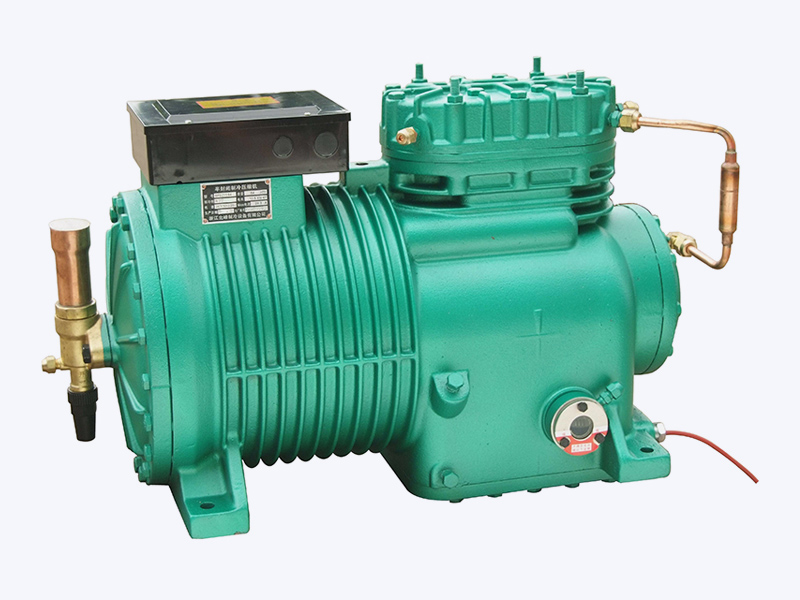
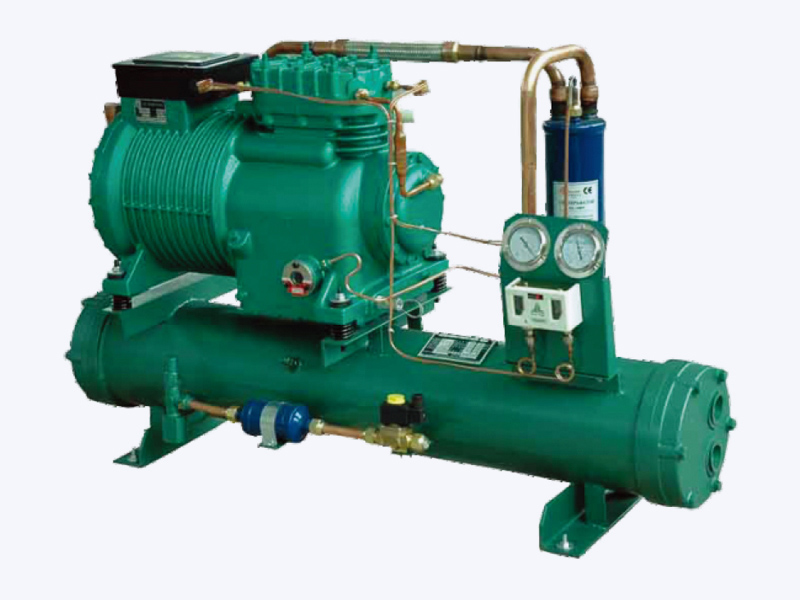
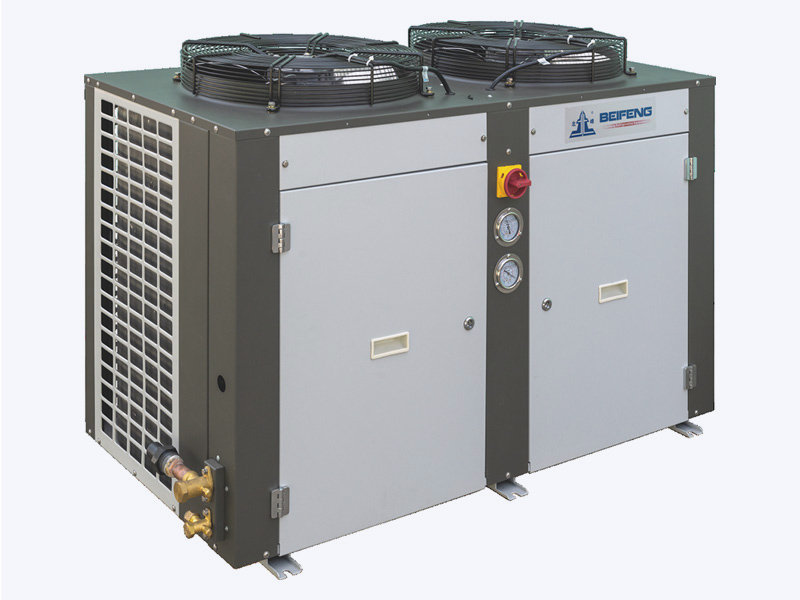
Once the design ambient is fixed, the next step is to choose equipment whose condenser and compressor are coordinated. A packaged air cooled condensing unit with a semi-hermetic compressor is the standard answer for cold rooms and process refrigeration, because the coil, fan, and compressor are sized together instead of assembled on site with guessed margins.
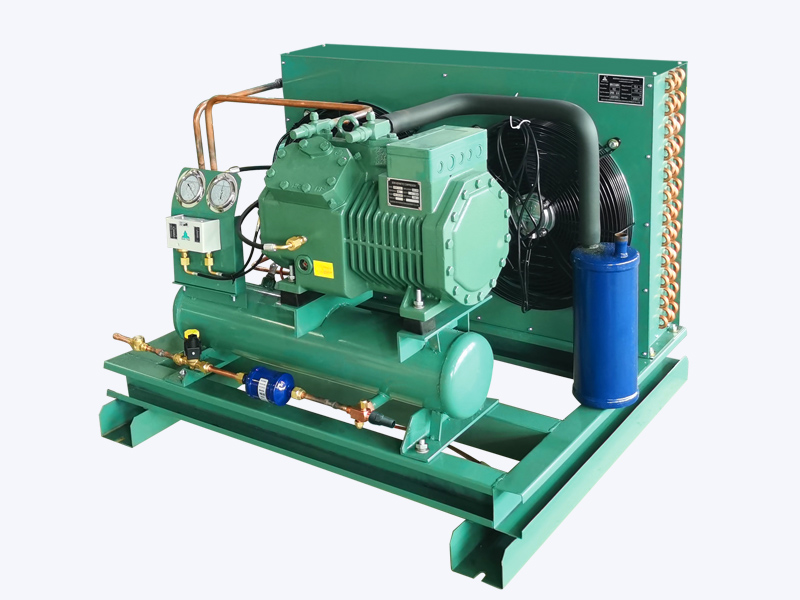 Semi-Hermetic Compressor Air-Cooled Condensing Unit (3HP-25HP)A packaged condensing unit with matched coil, fan, and compressor, offering reliable performance for cold rooms and process refrigeration across multiple refrigerants.View Product →
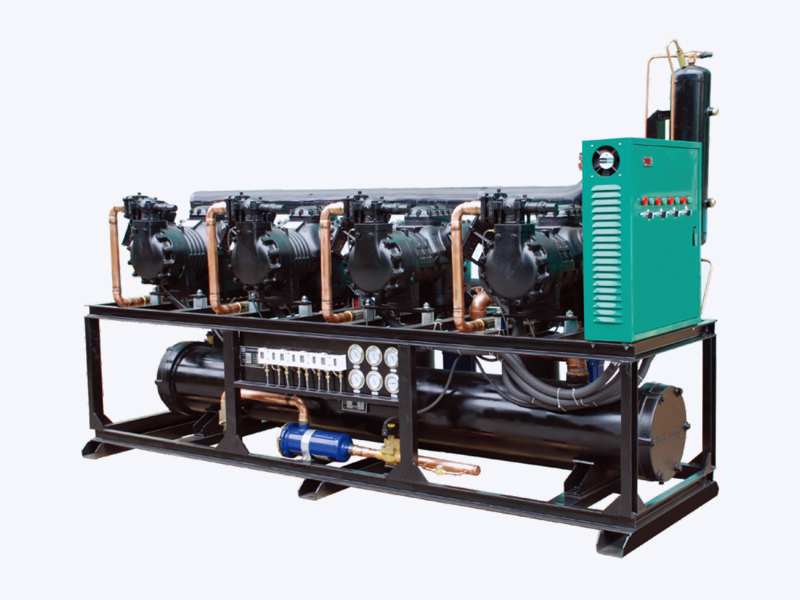
For larger duties, screw type condensing units offer the same integration at higher capacity. This matters most when the design temperature is demanding and a mismatch is expensive — a big compressor tripping on high pressure at midday costs far more than the same fault on a small unit.
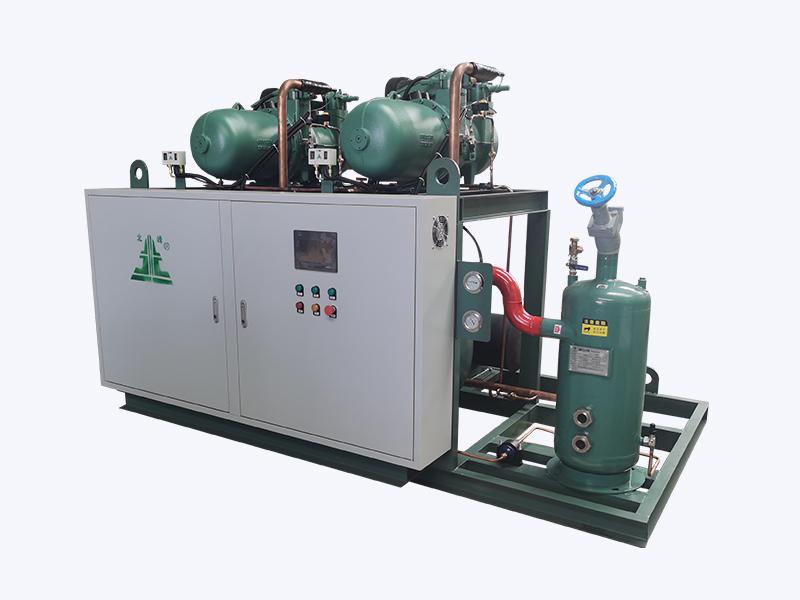 Screw-Type Condensing Units for High-Capacity RefrigerationScrew compressors provide efficient, quiet operation for demanding design temperatures, with multi-step capacity control and options for medium and low temperature applications.View Product →
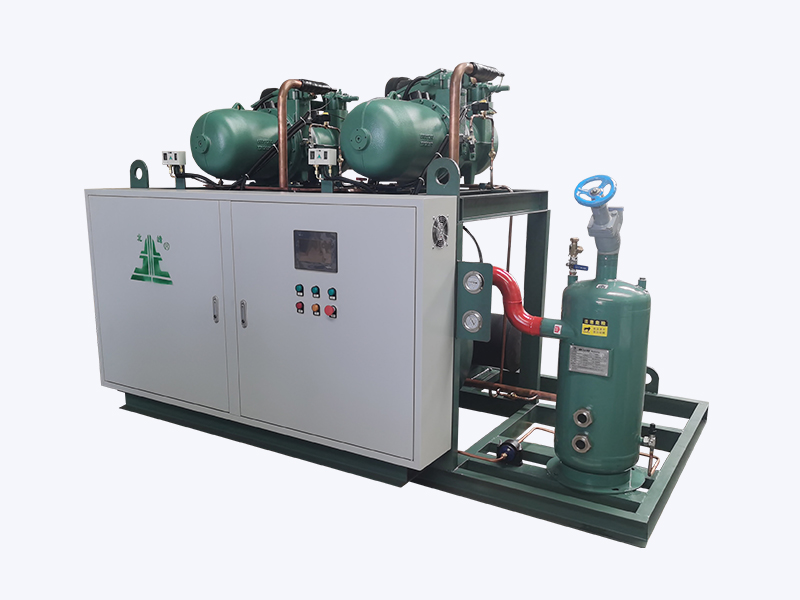
For supermarket and convenience-store retail, the temperature range and load profile differ from cold storage. Units designed for medium- and low-temperature retail duty, frequently with inverter control or multi-speed fans, handle the daily swing between daytime ambient and night-time minimums far better. In these systems, condenser control matters as much as coil area.
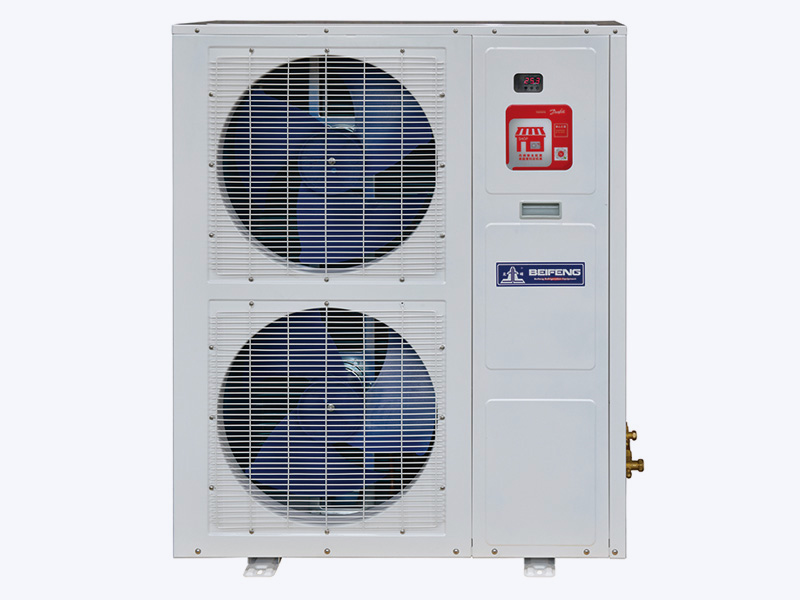 Fixed-Speed Condensing Units for Supermarkets and C-StoresDesigned for retail duty, these units handle daily temperature swings with adjustable-speed condenser fans and Danfoss components, saving energy and simplifying installation.View Product →
A manufacturer that designs the compressor, condenser, and controls as one package is easier to work with when the design temperature is unusual. The coil can be adjusted without losing sight of compressor limits, refrigerant charge, and oil management.
07 — A Short Selection Checklist
- Establish the local design dry-bulb from reliable meteorological data or a recognised engineering standard; never rely on monthly averages.
- Add site-specific corrections for wall proximity, roof radiation, prevailing wind, and recirculation potential.
- Choose a condensing temperature consistent with the compressor operating envelope and annual energy cost, not just the lowest first cost.
- Check minimum-ambient behaviour; fan staging or variable-speed control must be specified for climates with cold winters.
- Confirm the refrigerant type and pressure limits; a high-TD selection on a high-pressure refrigerant leaves less safety margin.
- Review the complete selection with the manufacturer before ordering; this is where the final ten percent of design errors are caught.
The design temperature deserves the same attention as the compressor selection. Get it right, and the condenser works quietly for years. Get it wrong, and no amount of maintenance will compensate. Use local data, question averages, and treat the condenser and compressor as one system.
If you are not certain which design conditions your site requires, share the project details with our engineering team before committing to a coil size.