 English
 عربى
عربى 简体中文
简体中文
On a 38°C day, a refrigeration condenser selected with a 10 K temperature difference must maintain a condensing temperature near 48°C. If the air cooled condenser is undersized, that number climbs even higher, and with it the compressor power draw. In practical terms, the air cooled condenser for refrigeration is not just an accessory; it is the component that sets the system’s operating pressure and ultimately its energy consumption.
What Is an Air Cooled Condenser in a Refrigeration System?
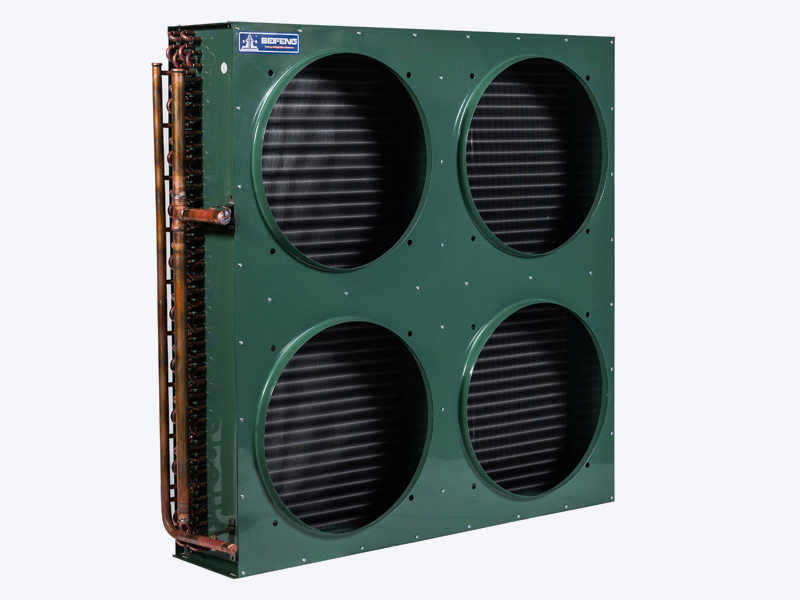
An air cooled condenser is a heat exchanger that removes heat from hot refrigerant vapor and turns it back into liquid. In a refrigeration system, it sits between the compressor discharge and the expansion device. The condenser uses ambient air flowing over finned coils to absorb latent and sensible heat from the refrigerant. In a typical R404A or R448A system, the condenser operates at a condensing temperature roughly 10–15 K above the surrounding air temperature. This temperature difference is often called the condenser approach temperature or TD.
Unlike the massive air cooled condensers used in power plants, which condense steam, a refrigeration condenser uses smaller copper or aluminum tubing and usually relies on axial fans. The coil may have one or more rows, and the fins are almost always aluminum for good heat transfer and low weight.
How Does an Air Cooled Condenser Work?
Four components form the backbone of every vapor-compression cycle: compressor, condenser, expansion device, and evaporator. The compressor raises the refrigerant pressure and temperature. The high-pressure superheated vapor then enters the condenser, where air absorbs heat and causes the refrigerant to condense at a pressure determined by the heat balance. As air moves across the coil, the refrigerant releases both the heat picked up in the evaporator and the heat added by compression. The resulting liquid refrigerant leaves the condenser slightly subcooled, which improves expansion valve stability and system efficiency.
Ambient temperature is the single biggest variable. A rise from 25°C to 40°C increases the condenser pressure and the compressor ratio. That leads to higher power consumption and lower cooling capacity. A properly selected condenser should keep the condensing temperature as low as practical, while still maintaining enough temperature difference for heat transfer.
Types and Construction Details
Coils, Fins, and Tubes
Most air cooled condensers use copper tubes with aluminum fins. Copper provides high thermal conductivity and is easy to braze. Aluminum fins increase the air-side surface area by a factor of 10 to 20. Some coils use internally threaded copper tubes to enhance refrigerant-side heat transfer and boost efficiency. For corrosive environments, fins can be coated with a protective coating, but the cost increases and heat transfer may be slightly affected. In ammonia systems, steel is used instead of copper because ammonia corrodes copper.
Fan Arrangements
Air cooled condensers may blow air horizontally or vertically. Vertical discharge units are common for outdoor installations because they reduce the risk of short-circuiting hot exhaust back into the fan inlet. Horizontal discharge units are easier to mount indoors with ducting, but recirculation care is required. Fans can be fixed speed or variable speed. Variable-speed fans save energy at part load and help maintain a stable condensing pressure in cold weather.
Application-Specific Designs
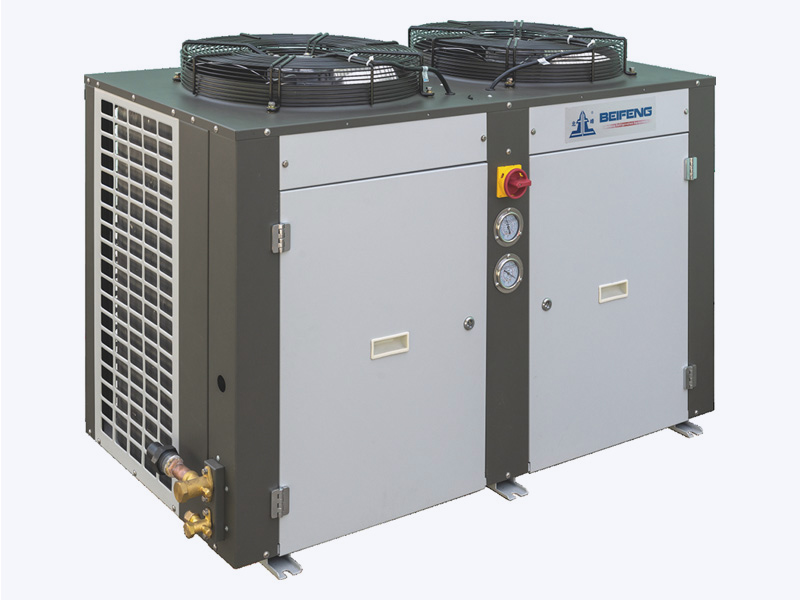
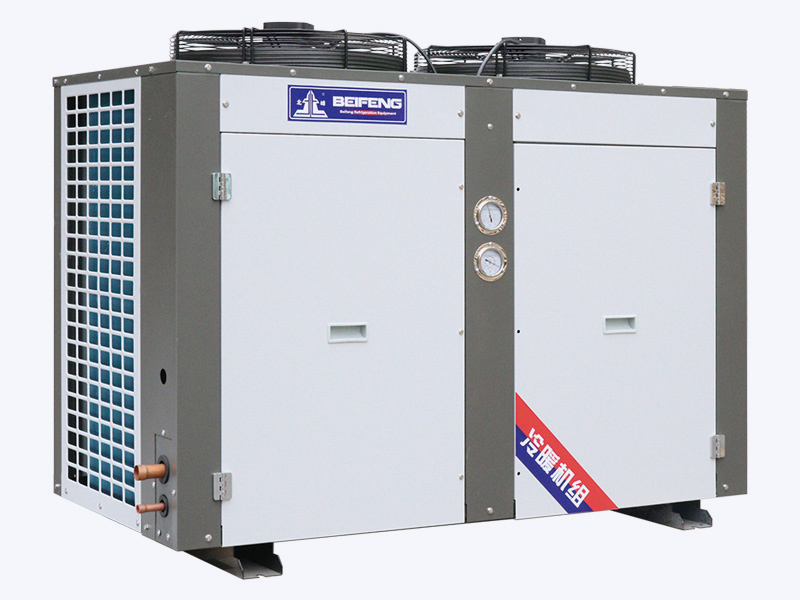
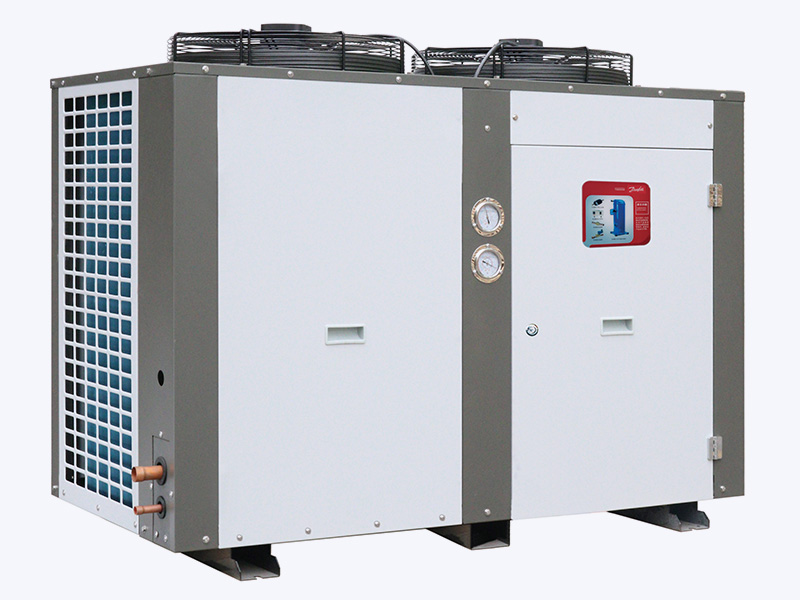
Air cooled condensers appear in several forms. Stand-alone remote condensers are installed away from the compressor rack. Condensing units integrate the compressor, condenser, and controls into one package. For buildings with strict noise limits, a low-noise commercial condensing unit combines a semi-hermetic compressor with a carefully matched air-cooled condenser and acoustic treatment.
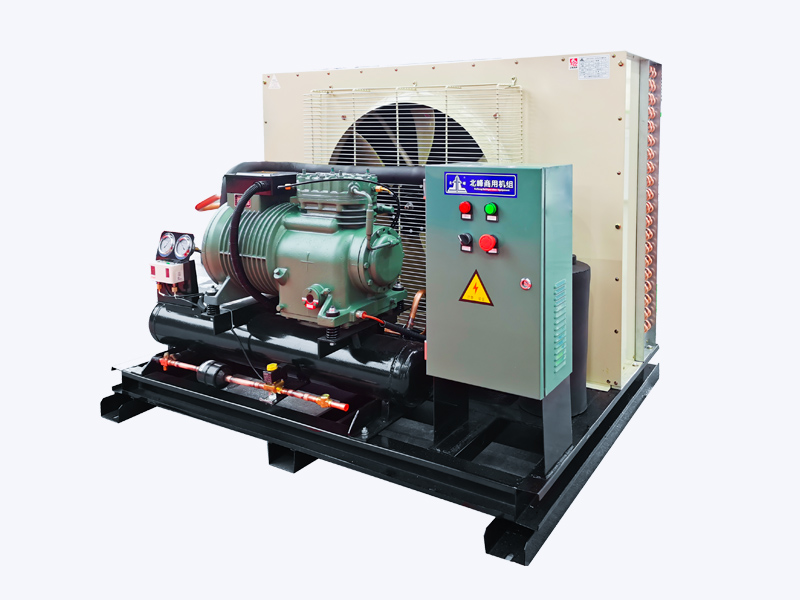 Wholesale Semi-hermetic Low-noise Open-type Commercial Condensing Chiller Unit FZhejiang Beifeng Refrigeration Equipment Co., Ltd is China wholesale Semi-hermetic Low-noise Open-type Commercial Condensing Chiller Unit...View Product →
Key Selection Factors for Refrigeration Systems
The following factors determine whether an air cooled condenser will perform well and last for years:
- Design ambient temperature. Choose the highest expected temperature for your location, not the annual average. A hot-climate design requires more condenser surface.
- Condensing temperature. For medium-temperature applications, a 45–50°C condensing temperature is common at 35°C ambient. For low-temperature systems, the same TD applies, but the compressor ratio is already high, so efficiency is more sensitive.
- Heat rejection capacity. The condenser must reject total heat = evaporator capacity + compressor power input. For example, a 20 kW refrigeration load with a 5 kW compressor needs roughly 25 kW heat rejection.
- Altitude. Above 1000 m, air density drops, so the mass flow through the coil decreases. Derate capacity by about 1% per 100 m above sea level, and confirm with the manufacturer.
- Available space and airflow clearance. Do not push the condenser against a wall. Allow at least one fan diameter of unobstructed space at the inlet and outlet to avoid recirculation.
- Refrigerant type. Check material compatibility, pressure limits, and oil return behavior.
- Noise and aesthetics. In residential areas, choose low-noise fan blades or a larger coil with lower fan speed.
- Part-load behavior. Capacity control on fans helps maintain condensing pressure in winter and reduces annual energy consumption.
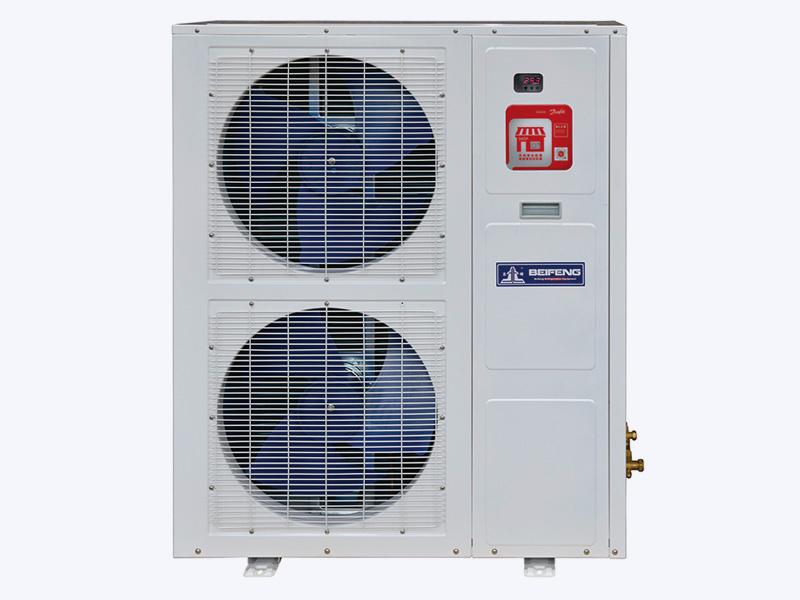
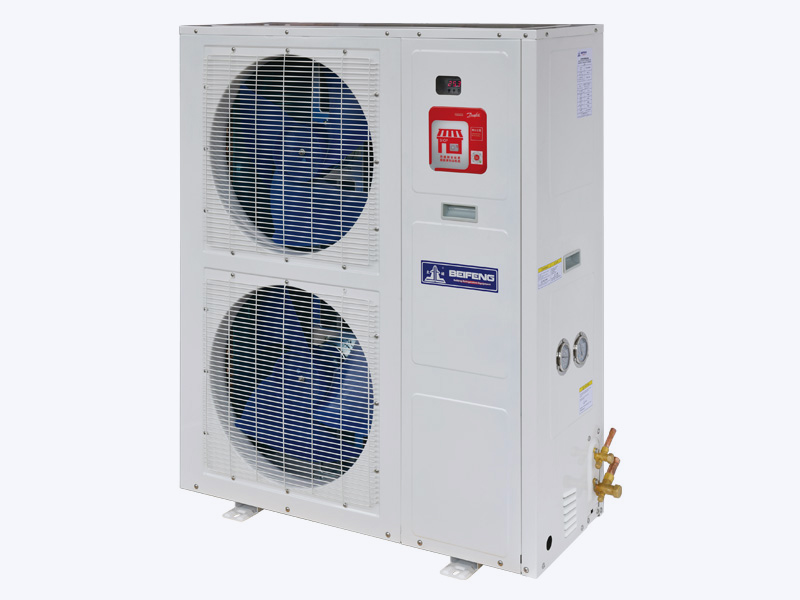
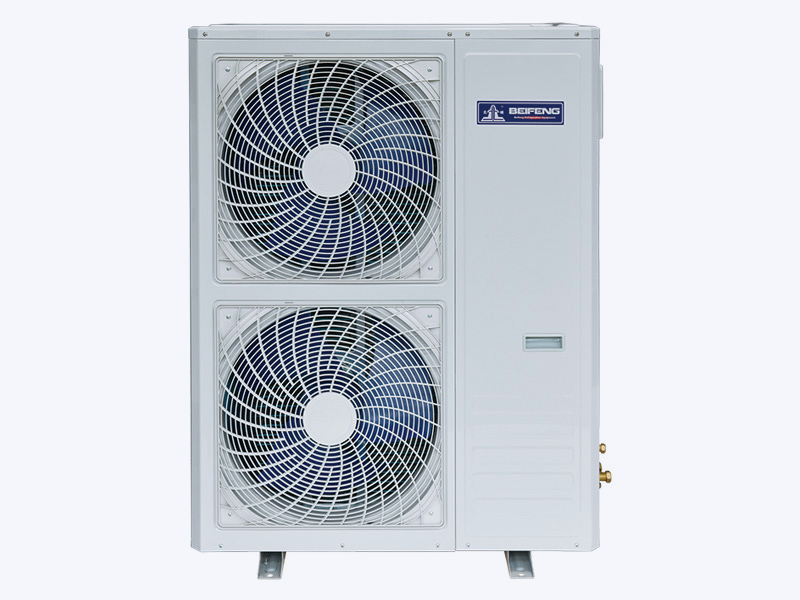
For many refrigeration systems, the most practical solution is a packaged air-cooled condensing unit. Our air-cooled condensing unit is an example of this integration, with the coil, fan, and compressor matched by the manufacturer rather than assembled on site.
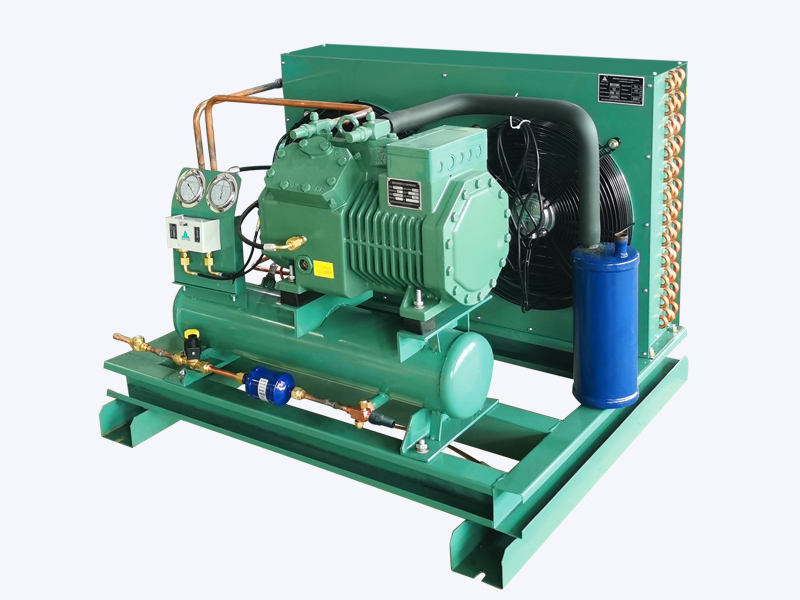 Wholesale Semi-Hermetic Compressor Air-Cooled Condensing Unit(3HP-25HP) Factory,Zhejiang Beifeng Refrigeration Equipment Co., Ltd is China wholesale Semi-Hermetic Compressor Air-Cooled Condensing Unit(3HP-25HP) factor...View Product →
Air Cooled or Water Cooled? Quick Comparison
Choose an air cooled condenser when water is scarce, installation needs to be simple, or maintenance staff is limited. Choose a water cooled condenser when you need very high efficiency in a hot climate or when a cooling tower is already part of the facility. The table below summarizes the practical differences.
| Factor | Air cooled | Water cooled |
|---|---|---|
| Water consumption | No continuous water use | Requires make-up water and water treatment |
| Efficiency | COP decreases as ambient temperature rises | More stable condensing temperature; higher COP in hot climates |
| Maintenance | Clean coils and check fans | Manage scale, corrosion, and water chemistry |
| Installation | Outdoor placement simple, no plumbing | Requires cooling tower or water supply plus pumps and piping |
Air cooled units are still the default for commercial refrigeration up to several hundred kilowatts because they eliminate water management. In very large industrial plants, water cooled systems may have a payback advantage, but the evaluation must include water and chemical costs.
Maintenance and Troubleshooting Notes
Most air cooled condenser problems come from airflow restrictions. Dirt, leaves, and dust accumulate between fins and shut off the air path. That raises condensing pressure and discharge temperature. Cleaning should be done with a soft brush, low-pressure water, or compressed air from the discharge side. Never use high-pressure water from a pressure washer directly at the fins, as it can flatten them.
Common faults include a stalled fan, faulty fan motor capacitor, or a refrigerant-side non-condensable gas. If the condenser coil is clean but the discharge pressure remains high, check the fan direction and the clearance around the unit. For a detailed selection method, refer to the guidelines for choosing air cooled condensers.
Selecting an air cooled condenser for refrigeration is a matter of balancing cost, noise, space, and energy. For most projects, packaged condensing units simplify this task. If you have an unusual ambient condition or a tight noise limit, our engineering team can help you evaluate the options. Simply contact our engineering team with the system details, and we will recommend a condenser or a complete condensing unit that fits the application.