 English
 عربى
 简体中文

Air-Cooled Condenser Fan Power: The Number That Decides Heat Rejection
Fan watts look like a minor datasheet line. In practice they set condensing pressure, compressor load, noise, and the service call that arrives on the hottest afternoon of the year.
On a 38 °C afternoon, a 25 kW air-cooled condensing unit can trip on its high-pressure switch while the compressor, charge, and coil all look normal. The fans are turning, so nobody suspects them. The useful question is how much air they are moving and how their current compares with the commissioning record. Fan-power problems usually begin in the gap between running and performing.
The practical rule: select fan power from the airflow required at the design ambient and the static pressure of the real installation, not from a habit of ordering the next motor size up. Once the coil surface is fixed, extra fan power buys diminishing heat rejection, more noise, and higher current.
Three figures matter more than the motor label: input watts, running amps at the actual supply, and delivered air volume at the installed static pressure. A fan can be correctly rated and still fail the job if its curve collapses against a tight discharge plenum or a blocked coil.
What the Fan Is Doing, and What It Is Not Doing
The fan does not cool the refrigerant. It moves ambient air across the finned coil so the refrigerant can condense at a pressure the compressor can tolerate. Heat rejection is roughly air mass flow times specific heat times the temperature rise from coil inlet to outlet. When airflow falls, the air leaves hotter, condensing temperature rises, and the compressor pays for it.
Fan laws describe what changes when only speed changes: airflow follows speed, static pressure follows the square of speed, and shaft power follows the cube. A 20% speed reduction can halve shaft power while still delivering 80% of the air. That is why low-ambient fan control aims at a minimum condensing pressure, not maximum airflow.
Air density matters too. At 40 °C, air is about 6% less dense than at 20 °C, so the same volume of air carries less mass and rejects less heat. The design ambient should be a real site number, not a mild catalogue default.
- Airflow rises or falls in proportion to fan speed.
- Static pressure changes with the square of fan speed.
- Shaft power changes with the cube of fan speed.
A clean coil and a correct fan curve are worth more than a larger motor bolted to the same fan.
Reading Fan Data Without Being Misled
Datasheets often print fan absorbed power in kW next to a current value in amps. Read the unit and the basis first. Absorbed power is electrical input at the motor terminals, not heat rejected by the coil, and it is normally stated per fan. A unit with two 2.5 kW fans draws about 5 kW at full speed, not 2.5 kW for the pair.
The same sheet should state voltage, frequency, fan speed, nominal air volume, and the static pressure at which that volume is delivered. Watts without an airflow and pressure basis cannot support a selection decision.
| Nominal condensing capacity | Fan configuration | Total fan input power | Running current, 380 V | Nominal air volume | Typical application |
|---|---|---|---|---|---|
| Small commercial, 10-15 kW | 2 x 0.12 kW | 0.24 kW | about 0.6 A | 2 x 1,700 m3/h | Small shop or cold room |
| Medium commercial, 20-30 kW | 2 x 0.25 kW | 0.5 kW | about 1.1 A | 2 x 3,500 m3/h | Convenience store, food service |
| Large commercial, 40-60 kW | 2 x 0.55 kW | 1.1 kW | about 2.4 A | 2 x 7,000 m3/h | Supermarket, light industrial |
| Industrial, multi-fan | 2 x 2.5 kW | 5.0 kW | about 8.2 A | 2 x 9,000 m3/h | Process cooling, large plant |
A 2.5 kW fan drawing 4.1 A on a 380 V three-phase supply is plausible once power factor and motor efficiency are included. A clamp meter reads current, not input power, which is why two apparently similar fans can draw different amps for the same wattage.
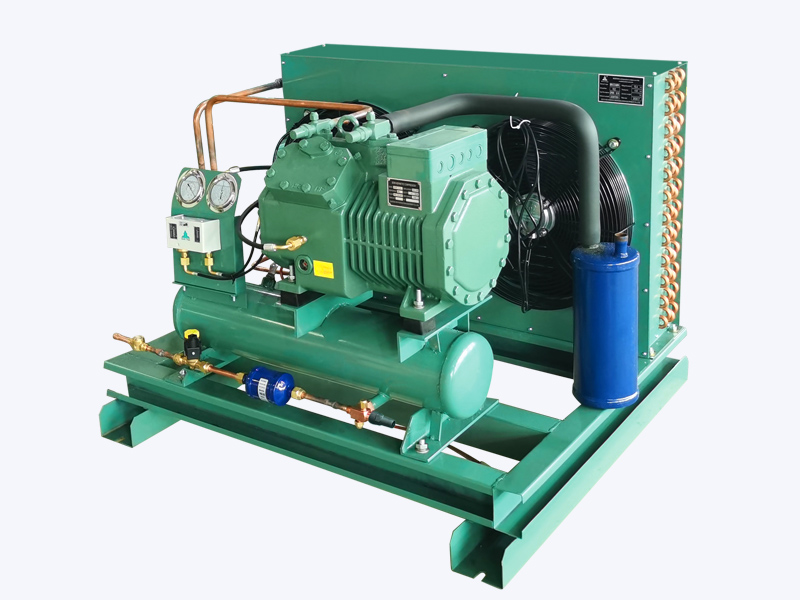
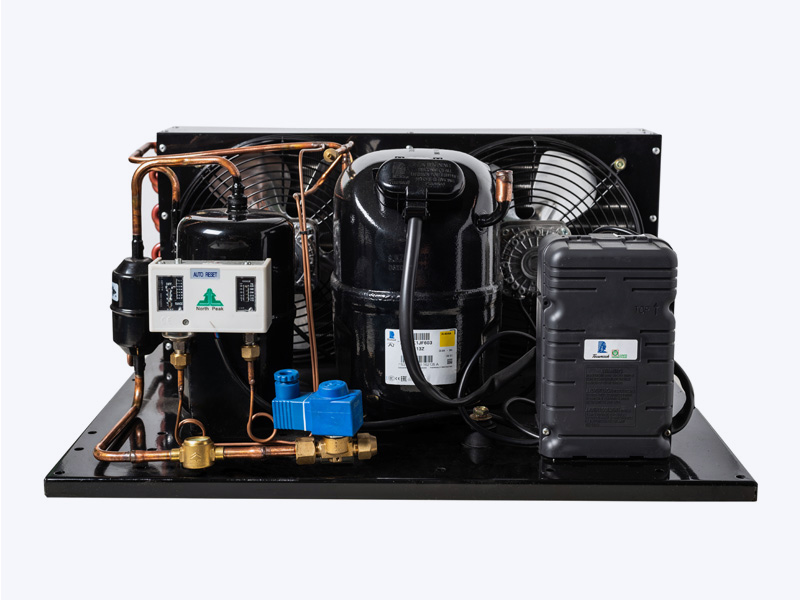
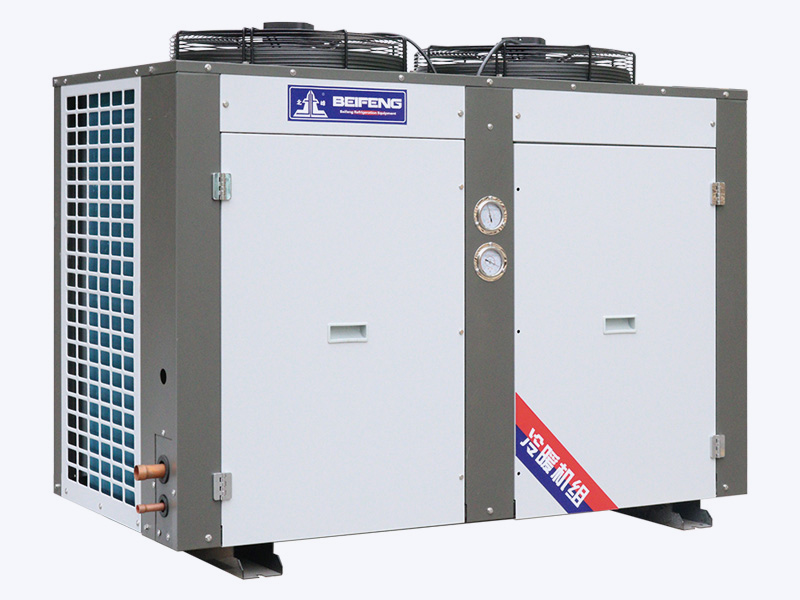
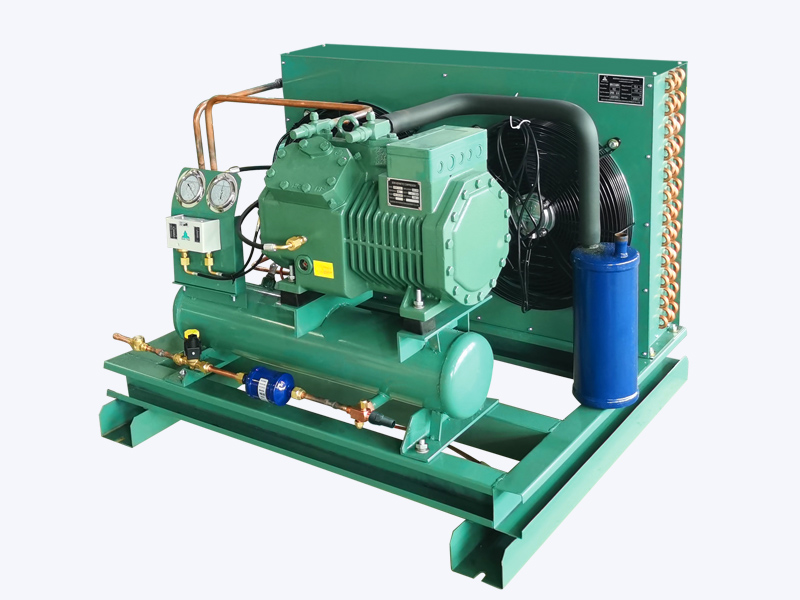 Semi-Hermetic Air-Cooled Condensing Units, 3HP–25HPThis semi-hermetic air-cooled condensing unit family supports multiple refrigerants and applications, so compare fan airflow and wattage at the same operating conditions.View Product →
When you compare our semi-hermetic air-cooled condensing units with other ranges, ask for fan data on the same voltage, frequency, and static-pressure basis. The comparison should be airflow first, watts second.
What the Datasheet Does Not Tell You
- Whether the quoted wattage is absorbed input power or shaft power.
- How the fan behaves at 50 Hz versus 60 Hz supply.
- Whether an EC motor holds speed as the coil resistance rises.
- How much airflow is lost through a restrictive discharge plenum.
Warning. Do not diagnose a dirty coil from fan current alone. A fixed-speed AC fan may draw less current as airflow falls, while a controlled EC fan may draw more to hold speed. Check coil condition, air pressure difference, and delivered airflow together.
How Fan Power Turns Into Compressor Energy
Condensing temperature is the hinge between fan power and compressor energy. If the fans cannot hold the design condensing temperature at design ambient, the compressor runs against a higher pressure and uses more electricity for the same cooling. In many commercial systems, each kelvin above design condensing temperature carries a low single-digit percentage penalty in compressor power; the exact value depends on refrigerant, compressor, and load, but the direction is consistent.
Under-sizing appears at design ambient, not on a mild spring day. A unit that holds pressure at 25 °C and struggles at 35 °C may have a fan problem, a coil problem, or both. Check airflow, coil condition, and refrigerant charge before adding fan power.
For larger systems with several fans, the same logic scales. The fan curve at the installed static pressure, not the motor nameplate, determines delivered airflow and the resulting condensing pressure.
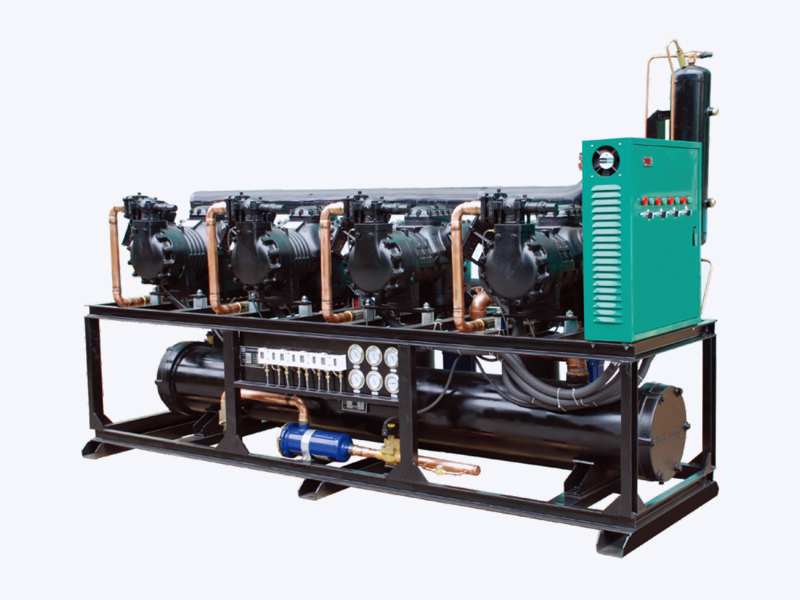
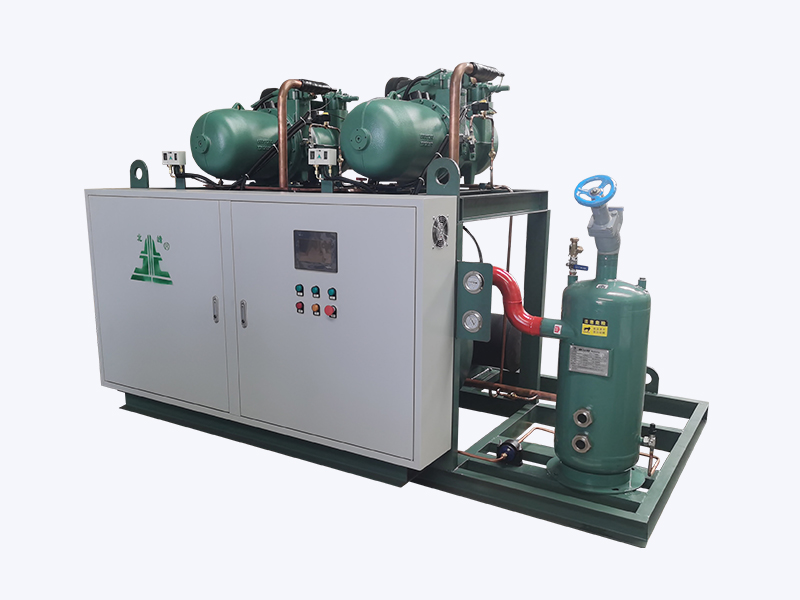
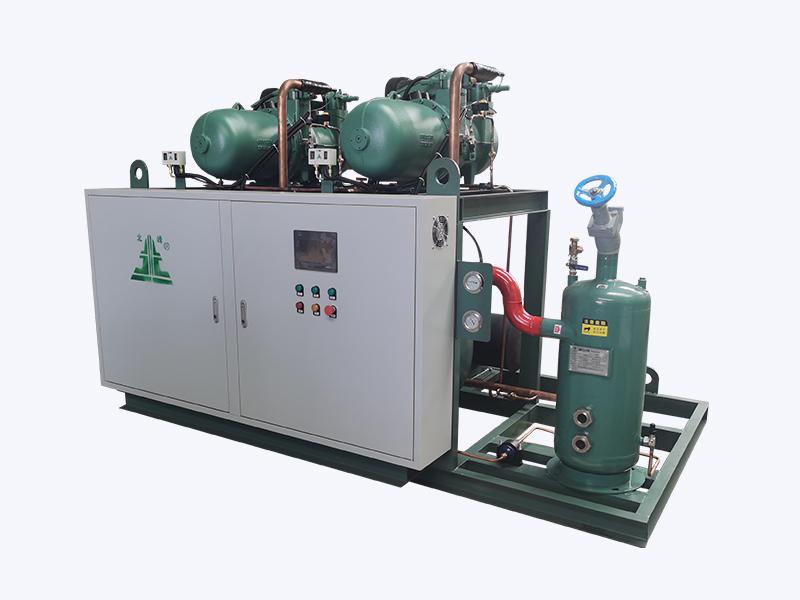 Screw-Type Condensing Units for High, Medium, and Low TemperatureSingle and paralleled units cover high- to low-temperature refrigeration; compare fan data at design ambient, voltage, and installed static pressure.View Product →
Where Fan Power Is Wasted
- Hot air recirculating from the discharge back into the coil intake.
- A discharge plenum that adds static pressure without improving airflow.
- Fans left at full speed in cool weather when a lower condensing pressure is already available.
- Blade guards or supports that create avoidable turbulence and noise.
- Voltage imbalance across a three-phase motor, which raises current for the same duty.
Info. A 10% fan-speed reduction cuts theoretical shaft power by about 27%, because power follows the cube of speed. In practice, the saving is smaller once motor and drive losses are included, but the direction is reliable.
A Procurement Checklist for Fan Power
Compare quotations on one basis: fan data at design ambient, design voltage, and the static pressure of the actual installation. The following checks prevent most surprises at commissioning.
- Confirm the supply voltage, phase, and frequency, including 50 Hz or 60 Hz for export projects.
- Ask for total fan input power and full-load current, not only the compressor figures.
- Obtain airflow at the installation static pressure, plus the fan curve.
- Check the sound pressure level at the distance that matters for the site.
- Confirm motor enclosure, insulation class, bearing type, and whether the motor can be replaced separately from the fan.
- State the control strategy: fixed speed, EC, variable frequency, or pressure-based fan cycling.
For export projects, check the supply frequency carefully. The same fan at 60 Hz runs about 20% faster than at 50 Hz, with roughly 20% more airflow and about 73% more shaft power. A model selected on 50 Hz data may be overcurrent on a 60 Hz site.
In supermarket and convenience-store retrofits, fan power also becomes a noise issue at the sales floor and at nearby properties. A medium-temperature inverter condensing unit can reduce fan speed at night instead of running at fixed full speed.
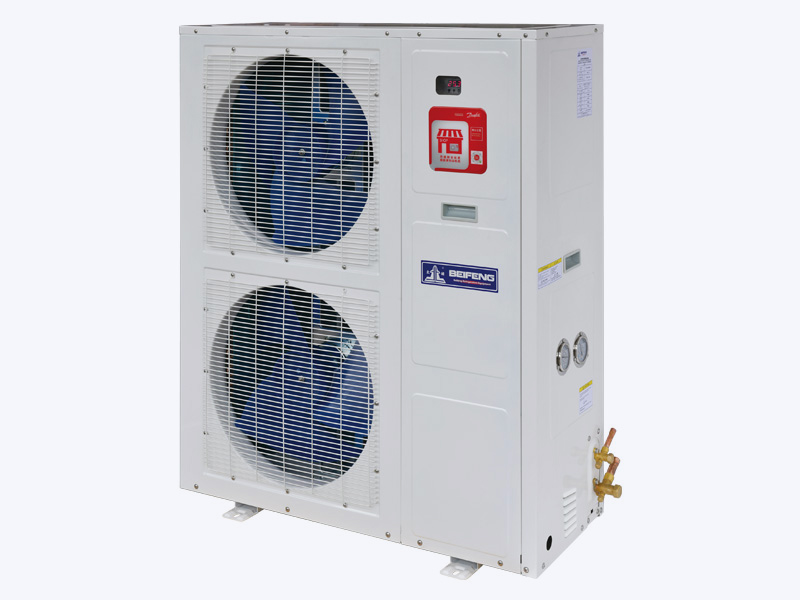 Supermarket and C-Store Medium-Temperature Inverter Condensing UnitA variable-speed fan and enclosed sound insulation suit retail retrofits where nighttime fan-speed reduction can address sales-floor noise.View Product →
Noise, Maintenance, and Service Life
Fan noise follows tip speed and installation quality. A fan running at reduced speed is quieter, but the tone can still be amplified by a rigid guard, a close discharge wall, or a plenum that turns the airflow. Fan power is also a trend line: record current and airflow at commissioning, then compare after coil cleaning, bearing replacement, or a change in fan speed.
- Clean the coil from the inside outward and avoid bending the fins.
- Check blade pitch, guard clearance, and motor mounting bolts for movement.
- Look for bearing noise and vibration before a motor fails in peak season.
- Record current, voltage, and condensing pressure at the same ambient conditions each service visit.
Success. A simple commissioning record, taken when the coil is clean and the ambient is known, gives the baseline that separates a normal fan from a failing one. It is the cheapest diagnostic tool on the site.
The Decision Comes Back to Three Checks
The decision comes back to three checks: airflow at design ambient, fan input power and current at the actual supply, and the static pressure of the real installation. When those agree, fan power stops being a datasheet detail and becomes part of the refrigeration design. When they disagree, the problem usually shows up as a high condensing pressure, a noisy plant room, or a compressor working harder than its selection intended.
If you are reviewing a new unit or replacing fans on an existing condenser, send us the design ambient, supply details, and coil data. We can check the fan duty against the unit and help you avoid buying watts that never turn into heat rejection. Contact our technical team with the site conditions before the next order is placed.