 English
 عربى
عربى 简体中文
简体中文
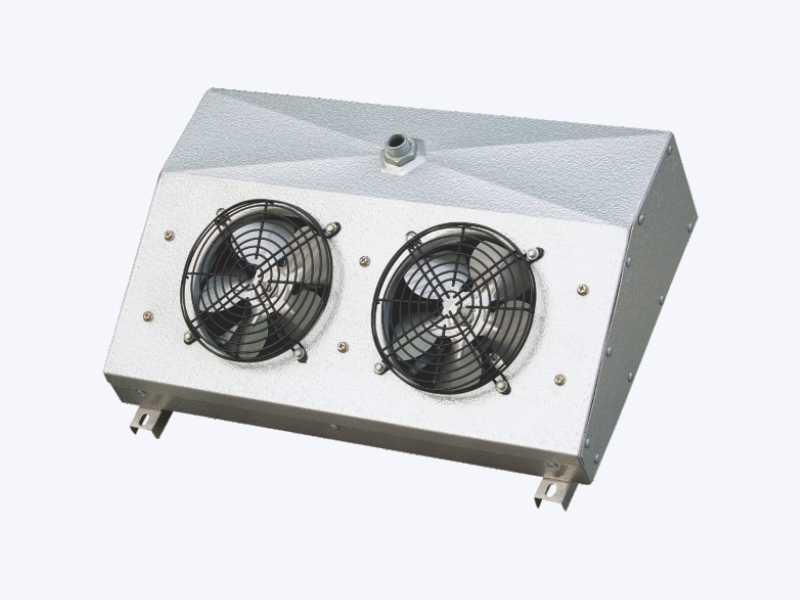
The installation complexity of an Industrial Type Air Cooler is significantly lower than that of ducted industrial ventilation systems. In most real-world industrial applications, an air cooler can be installed within 4–8 hours using minimal structural modifications, while ducted ventilation systems often require 2–7 days of installation depending on facility size, duct routing, and airflow design requirements. This makes Industrial Type Air Cooler systems a more practical choice for facilities that need rapid deployment, lower labor costs, and flexible cooling expansion.
However, installation simplicity does not automatically mean universal suitability. The correct selection depends on airflow requirements, humidity control, and system integration. Understanding these differences is essential when evaluating industrial cooling solutions.
Installation Time and Structural Requirements
One of the most critical differences between an Industrial Type Air Cooler and ducted ventilation systems is installation time. An Industrial Type Air Cooler typically requires only a water connection, power supply (usually 220V–380V), and basic positioning. In contrast, ducted systems require full architectural planning, ceiling modifications, duct fabrication, and airflow balancing.
For example, in a 2,000 m² warehouse, installing an Industrial Type Air Cooler system may take a team of 2–3 technicians less than one working day. The same space using ducted ventilation may require engineering design approval, metal duct installation, insulation work, and commissioning tests extending over 5 days or more.
This difference becomes even more pronounced in retrofit projects where existing buildings are not designed for duct routing.
System Components and Installation Complexity
The simplicity of an Industrial Type Air Cooler lies in its integrated structure. It includes a fan system, water pump, evaporative cooling pads, and control unit all within a single housing. This reduces installation to a plug-and-operate process in many cases.
Ducted industrial ventilation systems, however, require multiple independent components:
- Main air handling unit (AHU)
- Custom duct network design
- Diffusers and dampers
- Control and balancing systems
This multi-component structure increases installation complexity and requires specialized HVAC technicians for proper configuration.
Labor Cost and Technical Expertise
Labor cost is another major factor when comparing these systems. Installing an Industrial Type Air Cooler typically requires general technicians with basic electrical and plumbing knowledge. The average labor cost ranges between $300–$800 per unit installation depending on region and mounting height.
In contrast, ducted systems require HVAC engineers, sheet metal fabricators, and commissioning specialists. Labor costs can reach $5,000–$20,000 for medium-sized industrial facilities due to engineering design and installation precision requirements.
The need for specialized expertise significantly increases both upfront cost and project timeline.
Flexibility and Scalability of Installation
Industrial Type Air Coolers offer high flexibility. Units can be added, repositioned, or removed without redesigning the entire system. This makes them ideal for dynamic industrial environments such as warehouses or temporary production facilities.
Ducted ventilation systems are far less flexible. Any modification requires recalculating airflow balance and often dismantling sections of the duct network.
For facilities that anticipate expansion, relocation, or layout changes, the modular nature of Industrial Type Air Cooler systems is a major advantage.
Environmental and Operational Considerations
Before selecting a system, it is important to understand what is an evaporative air cooler and how it interacts with ambient conditions. These systems rely on water evaporation to reduce air temperature, making them more efficient in dry climates.
In high-humidity environments, performance may decrease, but installation advantages remain significant. Some high-performance systems, sometimes referred to as an extreme speed air cooler, use high-capacity fans and enhanced evaporation media to improve airflow and cooling speed in industrial environments.
Unlike ducted systems, which maintain consistent internal air distribution regardless of humidity, air coolers depend on environmental conditions, which should be evaluated before installation.
Sizing and System Planning Impact on Installation
Proper system sizing directly influences installation complexity. Users often ask what size evaporative air cooler do i need when planning industrial cooling. Oversized units may increase water and energy consumption, while undersized units reduce cooling efficiency.
Industrial Type Air Cooler sizing is typically based on airflow rate (m³/h), space volume, and heat load. For example, a 1,000 m² facility with moderate heat load may require airflow between 20,000–40,000 m³/h.
Ducted systems require even more complex calculations involving static pressure, duct friction loss, and zoning design, increasing both engineering and installation effort.
The installation complexity of an Industrial Type Air Cooler is significantly lower than ducted industrial ventilation systems due to its integrated design, minimal structural requirements, and faster deployment time. While ducted systems provide precise airflow control and long-term HVAC integration, they require extensive planning, higher labor costs, and longer installation cycles.
For industries prioritizing speed, cost efficiency, and flexible deployment, Industrial Type Air Cooler systems offer a highly practical solution. However, for environments requiring strict climate control and zoning precision, ducted ventilation systems remain necessary despite their installation complexity.
.jpg?imageView2/2/w/300/h/300/format/webp/q/75)