 English
 عربى
 简体中文

Air Cooled Condenser Dry Bulb Temperature: The Number That Decides Summer Capacity
Dry bulb temperature sets the floor for condensing pressure and the ceiling on usable capacity. Size an air cooled condenser around the wrong value, and the plant runs short on the hottest afternoons of the year.
Picture a cold room or a small supermarket that holds temperature easily in April and fights for every degree in August. The compressor is healthy, the charge is correct, the coil is clean, the door seals are new. The only thing that changed is the air entering the condenser, which has gone from roughly 25 °C to something above 40 °C.
Short answer first: dry bulb temperature is the temperature of the air entering the condenser coil, measured with no correction for moisture. For an air cooled condenser it is the most important ambient input, because it fixes how far condensing temperature must rise above ambient before heat can leave the coil. Condensing temperature then fixes capacity, power draw, discharge pressure and long-term reliability.
The rest of this article is about using that number honestly: what it measures, what it ignores, how much capacity it takes away, which design value to choose, and what to hand a supplier when you specify equipment.
What Dry Bulb Temperature Measures — and What It Leaves Out
Dry bulb temperature is the temperature of air as shown by an ordinary thermometer shielded from direct radiation, with no adjustment for how much water vapour the air carries. It is the sensible temperature a weather report gives you, and the one a person feels on dry skin. Because it ignores moisture, it does not tell you how much evaporative cooling is available, and it does not tell you when condensation will begin.
| Temperature | What it measures | Where it drives design |
|---|---|---|
| Dry bulb | Sensible air temperature, humidity ignored | Air cooled condenser sizing, condensing pressure, capacity at design ambient |
| Wet bulb | The lowest temperature evaporating water can reach | Cooling towers, evaporative condensers, air cooler air-side performance |
| Dew point | The temperature at which moisture condenses | Coil frosting, insulation thickness, door infiltration and defrost cycles |
For an air cooled condenser the choice is simple. The coil rejects heat sensibly to a stream of air, and no water evaporates in the process, so dry bulb alone sets the air-side limit. Wet bulb takes over the moment you switch to a cooling tower or an evaporative condenser, where evaporation does the work. Dew point reappears on the refrigerated side, where it decides how much moisture will condense on cold surfaces and how often a coil needs defrosting.
Info
Read dry bulb where the air actually enters the coil — in shade, at coil height, on the upstream side. A sensor mounted on a sunlit wall or above a warm roof can read 3 to 5 K high, and that error is large enough to change the coil selection.
Why an Air Cooled Condenser Is So Sensitive to Dry Bulb
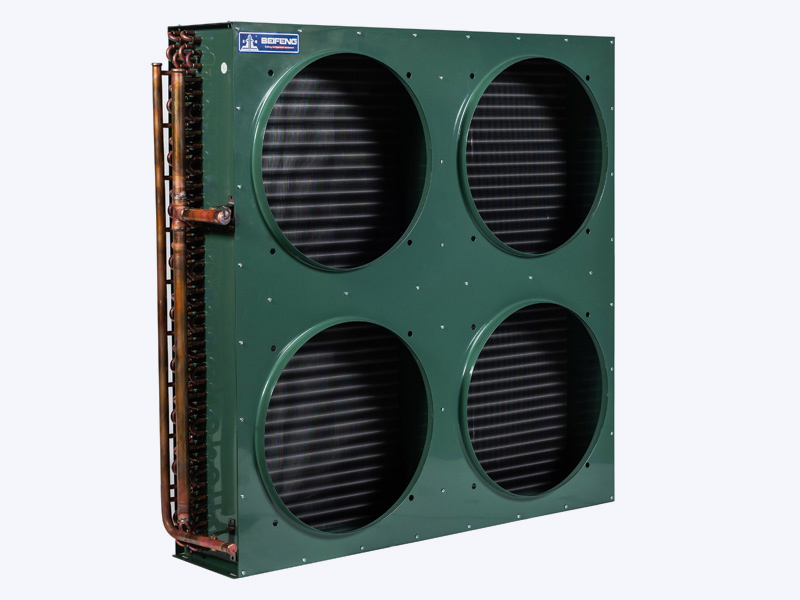
The gap between ambient air and condensing refrigerant is normally expressed as the coil approach, or TD. Most commercial air cooled condensers are selected with a TD of about 10 to 15 K. At 32 °C ambient, a 12 K TD puts condensing temperature near 44 °C. Push ambient to 43 °C and the same unit sits at roughly 55 °C, a pressure and power level the compressor feels immediately.
Two things happen at once. The gap between refrigerant and air narrows, so the coil rejects fewer watts per square metre of surface. Meanwhile the compressor must lift vapour from the same suction pressure to a higher condensing pressure, so it moves less mass flow for every kilowatt of input. Capacity falls and current rises on the same afternoon.
As a working rule, each 1 K of extra condensing temperature typically costs somewhere between 2 and 4 percent of compressor power, depending on refrigerant and compressor type. Across a shift from a mild 25 °C to a demanding 43 °C, that is not a rounding error. It is the difference between a plant with margin and one without.
An air cooled condenser is never selected for the average day. It is selected for the hour in which it can no longer hold the room, and on an air cooled plant that hour is defined by dry bulb temperature.
This is also why water cooled options stay attractive in hot climates. When ambient air is the only heat sink available, every degree of dry bulb becomes a design constraint. When water is on site, condensing temperature can be held far closer to a wet bulb target.
Choosing a Design Dry Bulb You Can Defend
The wrong instinct is to size against the highest temperature the site has ever recorded. The right starting point is a design dry bulb with a stated exceedance — in most engineering practice, a value exceeded for roughly 1 percent of annual hours, about 88 hours in a typical year. It is a statistical choice, not a guess, and it keeps first cost proportionate to the load the plant will actually face.
Choose too low and the plant loses capacity for a few dozen afternoons. For comfort cooling that may be tolerable; for a frozen food case, a pharmaceutical store or a process chiller it usually is not. Choose too high and you buy coil surface, fan power and structural steel for a temperature that may never occur — while creating a winter problem, because an oversized condenser can drop condensing pressure so far that the expansion valve loses its feed.
Altitude, layout and maintenance belong in the same decision. Thin air at 1,500 metres carries less mass flow for the same fan power, so a correction is required. A condenser tucked against a wall or under a partial roof can breathe its own discharge air and see an effective inlet temperature 5 to 8 K above the weather station reading.
Warning
Recirculation is the most common real-world dry bulb error. If a unit cannot discharge warm air freely and draw cool air from at least one unobstructed side, the coil behaves as though the site were several degrees hotter than it is.
Then there is the seasonal swing in the opposite direction. A condenser sized for 43 °C may need fan cycling, variable speed control or a hold-back valve to keep condensing pressure usable at 5 °C. The design dry bulb defines the top of the range; the winter dry bulb defines the controls that keep the plant stable at the bottom of it.
Numbers to Bring to a Supplier Before You Size Anything
- Site design dry bulb, with the exceedance basis stated, plus site altitude.
- Required cooling capacity at that design dry bulb, not the catalogue rating at 32 °C.
- Maximum acceptable saturated discharge and suction temperatures for the refrigerant in use.
- Available footprint, coil clearance and any night-time noise limit.
- Site conditions: dust, coastal salt, kitchen grease or pollen, all of which change how fast fins foul.
- Expected winter minimum ambient, so low-ambient controls can be quoted with the unit.
- Refrigerant, and whether the plant may be converted to another one later.
A supplier who receives all seven can usually return a selection that is honest about capacity at design conditions. A supplier who receives only a nominal tonnage tends to fill in the rest with assumptions, and those assumptions rarely favour the buyer. If you want to see how the arithmetic works on the condenser side, our note on air cooled condenser selection calculation walks through the specification inputs step by step.
Matching the Condensing Unit to the Site, Not to the Catalogue
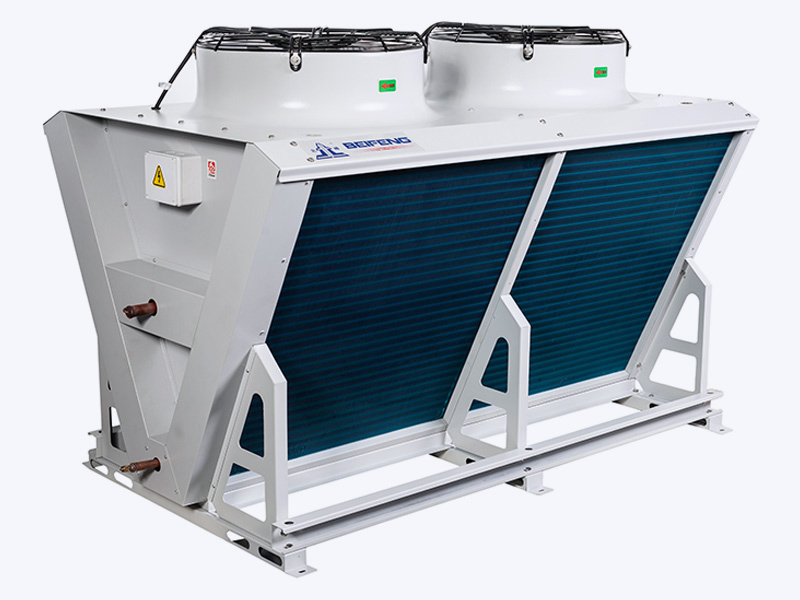
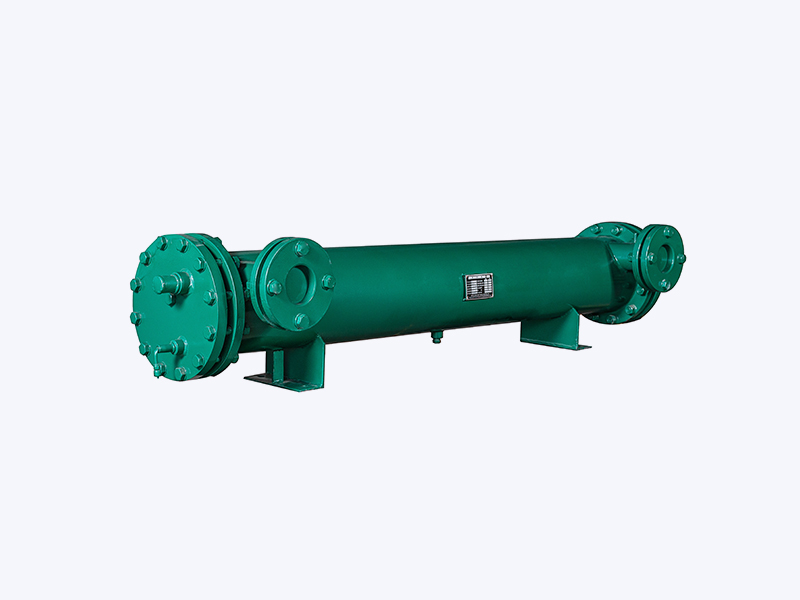
Zhejiang Beifeng has been building refrigeration equipment since 1986, with two production sites in Shengzhou covering 60,000 square metres and sales offices in Shanghai, Beijing and Guangzhou. Air cooled condensers, condensing units and heat exchangers are core product lines, and the factory test centre uses helium leak detection on condensers and evaporators before shipment — a small detail, but one that matters when a coil has to hold pressure through twenty summers of thermal cycling.
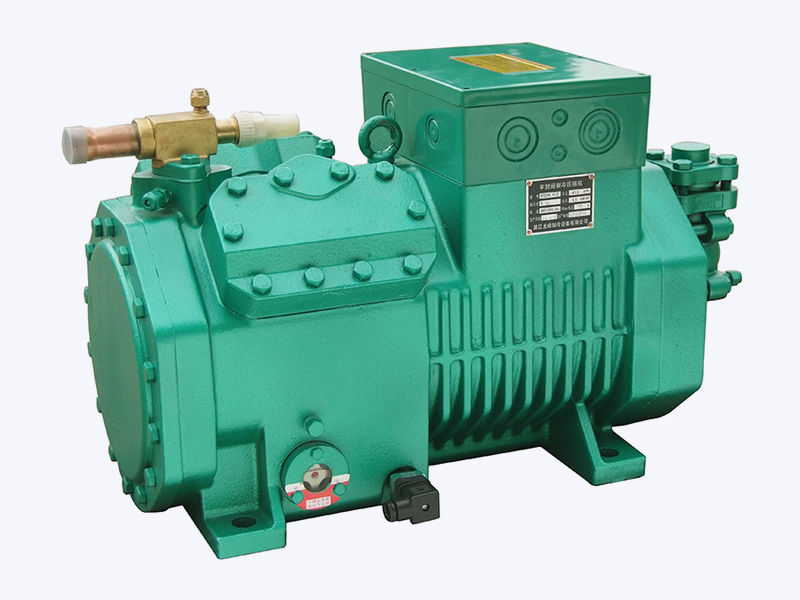
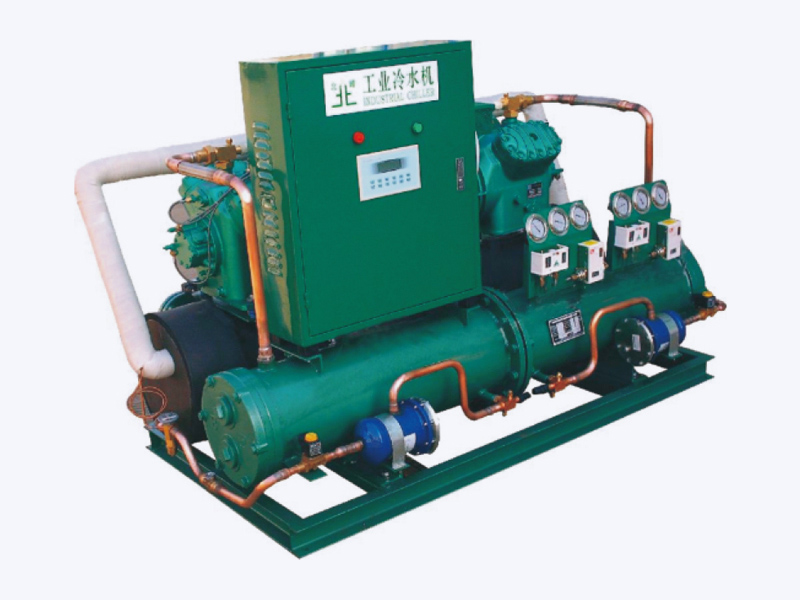
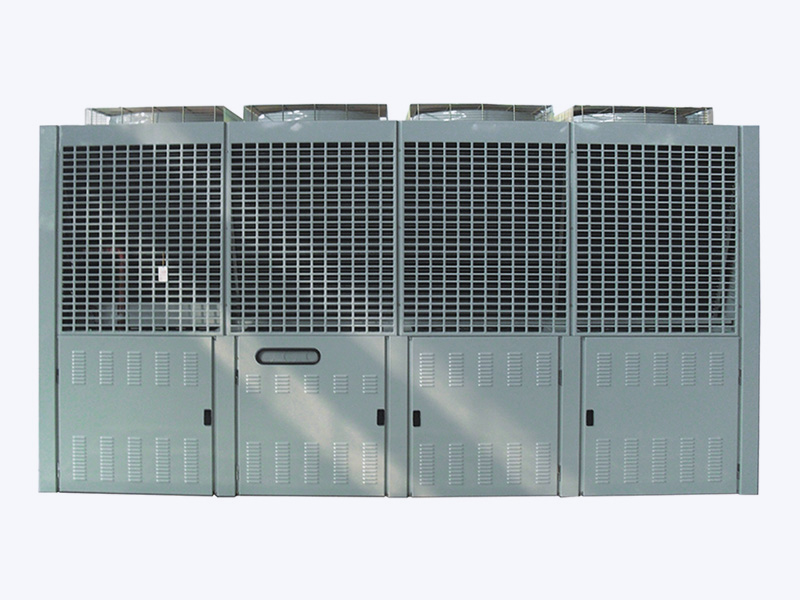
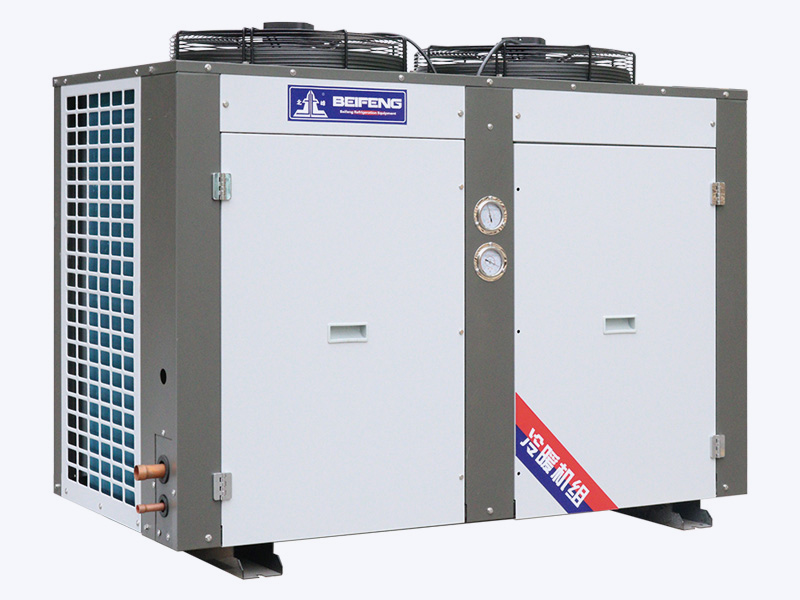
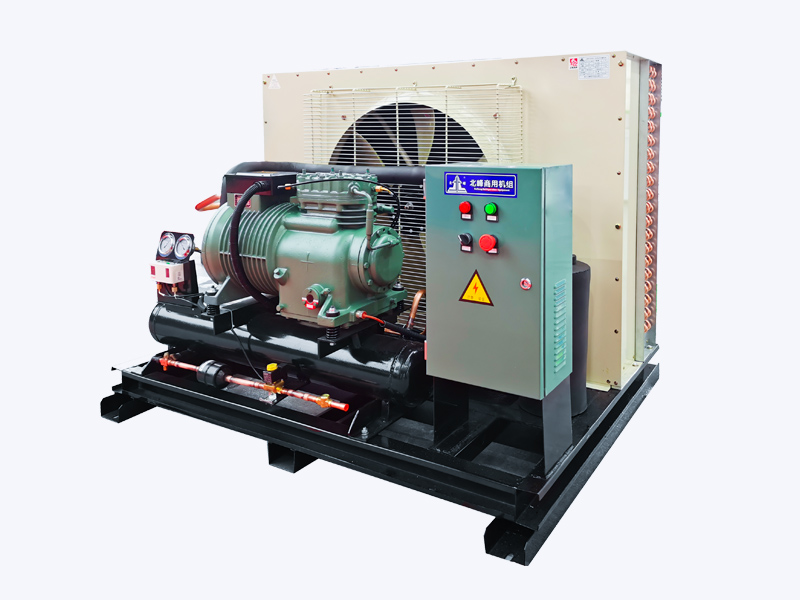
For a site with a high design dry bulb, an air cooled condensing unit with a semi-hermetic compressor is the straightforward match: compressor and coil are selected together for the same ambient, so the capacity figure you receive already reflects the TD. For larger loads, such as a distribution centre or a process plant, a screw type condensing unit holds efficiency more steadily across a wide ambient range and tolerates part-load operation better than a bank of smaller units.
Success
One number, applied early, saves the whole project. Fix the design dry bulb before the coil is chosen, and capacity, power and control decisions all fall into place around a value the site can actually meet.
Dry bulb temperature is not a background weather detail. For an air cooled condenser it is the reference point for the entire heat rejection path: the condensing temperature the compressor must live with, the capacity the plant can deliver on a hot afternoon, and the amount of coil surface you pay for.
Get the value right — a defensible exceedance figure, corrected for altitude, recirculation and local dirt — and equipment selection becomes a matter of arithmetic rather than hope. If you would like a second opinion on a design dry bulb and the condensing unit that suits it, send your site conditions to our engineers and we will run the selection with you.