 English
 عربى
عربى 简体中文
简体中文
Two Machines Share the Same Name
A procurement engineer ordering equipment for a frozen food warehouse and a homeowner looking for relief from summer heat type the same two words into a search engine: “air cooler.” The results look similar, but the machines the two searchers actually need are fundamentally different. The homeowner is usually after an evaporative air cooler — a low-cost appliance that passes air through wet pads. The engineer needs an industrial unit cooler, a refrigerant evaporator that hangs from the cold room ceiling and pulls heat out of the storage space. That distinction matters, because most selection errors come from comparing the wrong class of equipment.
This guide explains what both types of air cooler do, how they work, and when each one makes sense. The main focus is the industrial air cooler, because that is the version that carries real load in cold storage, food processing, and supermarket refrigeration. The article then walks through the selection criteria — capacity, fin spacing, defrost, airflow, and materials — that determine whether a unit performs reliably for years or creates constant problems.
What an Air Cooler Actually Does
Evaporative Air Coolers: The Consumer Option
An evaporative air cooler, also called a swamp cooler, draws warm air through pads saturated with water. The water evaporates, absorbing heat from the air, and a fan pushes the cooled, humidified air into the room. The process uses only a fan and a small water pump, which is why running costs stay far below those of a compressor-based air conditioner.
The limitation is physical. The cooling effect depends on how much moisture the air can absorb. In hot, dry climates the temperature drop is noticeable; in humid conditions, or in a sealed room without ventilation, the same appliance adds moisture without delivering comfort.
Industrial Unit Coolers: The Refrigeration Workhorse
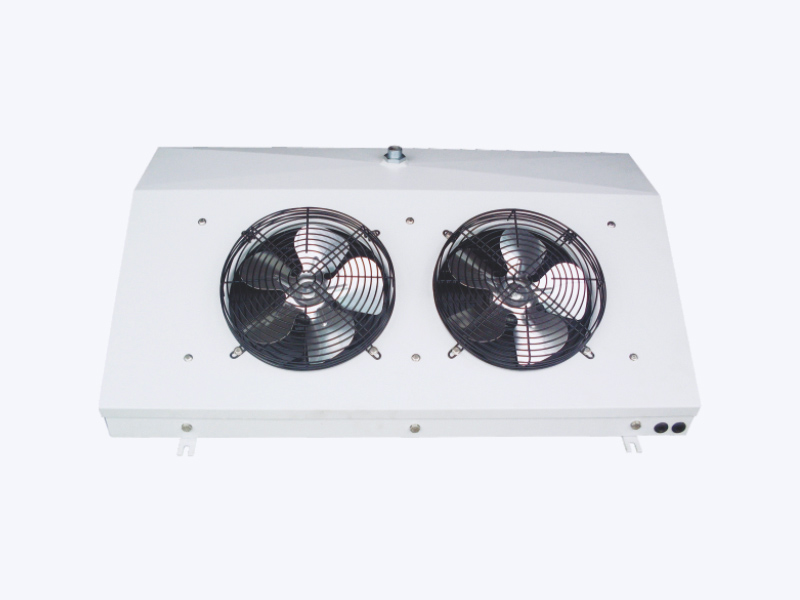
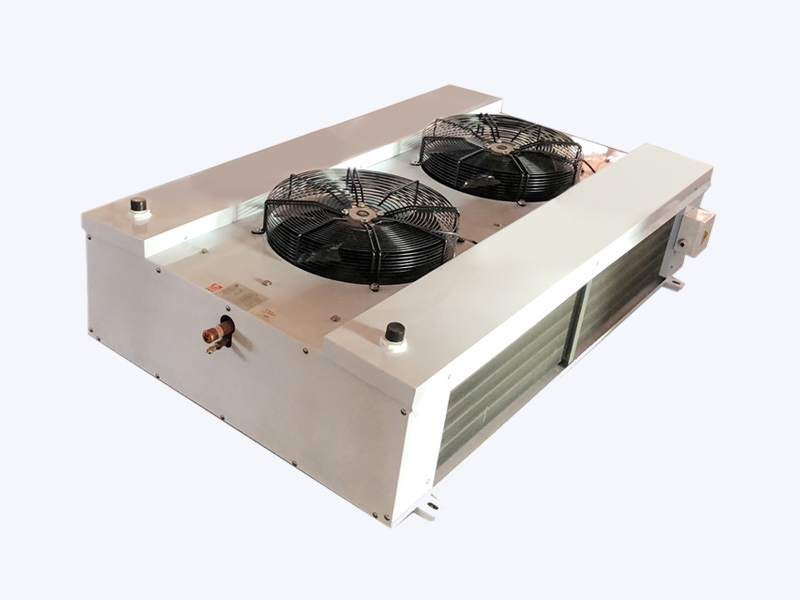
An industrial air cooler is the evaporator side of a refrigeration system. It is essentially a heat exchanger that uses air as a cooling medium: refrigerant evaporates inside the tubes, fans draw room air across the finned coil, and heat moves from air to refrigerant. The cooled air recirculates, and condensate drains away. Because the coil removes moisture instead of adding it, the unit also helps control humidity inside a cold room.
These units work continuously at temperatures from just above freezing down to -35°C and below, so the construction has to tolerate frost, moisture, and constant fan operation. The design has settled into a standard formula: copper tubes with aluminium fins, an axial fan set, a drain pan, and a defrost system. For warehouses and processing rooms, the aluminium fin evaporator air coolers we manufacture in-house follow exactly that architecture, with fin geometry adjusted to the application.
.jpg) Wholesale Aluminium Fin Evaporator Factory, Company - Zhejiang Beifeng RefrigeraZhejiang Beifeng Refrigeration Equipment Co., Ltd is China wholesale Aluminium Fin Evaporator factory and company, details:View Product →
Wholesale Aluminium Fin Evaporator Factory, Company - Zhejiang Beifeng RefrigeraZhejiang Beifeng Refrigeration Equipment Co., Ltd is China wholesale Aluminium Fin Evaporator factory and company, details:View Product →
| Feature | Evaporative air cooler | Industrial unit cooler |
|---|---|---|
| Cooling medium | Water evaporating from pads | Refrigerant evaporating in a coil |
| Humidity effect | Adds moisture to the air | Removes moisture as condensate |
| Typical setting | Homes, workshops, dry climates | Cold rooms, freezers, processing areas |
| Water supply needed | Yes, refilled regularly | No, only defrost drainage |
| Running cost | Low | Depends on system efficiency |
| Typical capacity range | Small, room level | From a few kW to tens of kW |
Key Selection Criteria for an Industrial Air Cooler
Once you confirm that the project needs a unit cooler, the choice comes down to a handful of parameters. Each one changes price, energy consumption, and long-term reliability.
Capacity and Evaporating Temperature
Capacity is expressed in kilowatts of heat removal at a stated room temperature and refrigerant evaporating temperature. A common design point for cold rooms is a temperature difference of 6 to 10 K between room air and refrigerant. Running the evaporator unnecessarily cold raises energy use and dries out stored products, so the correct approach is to match capacity to the calculated heat load instead of buying the biggest unit available.
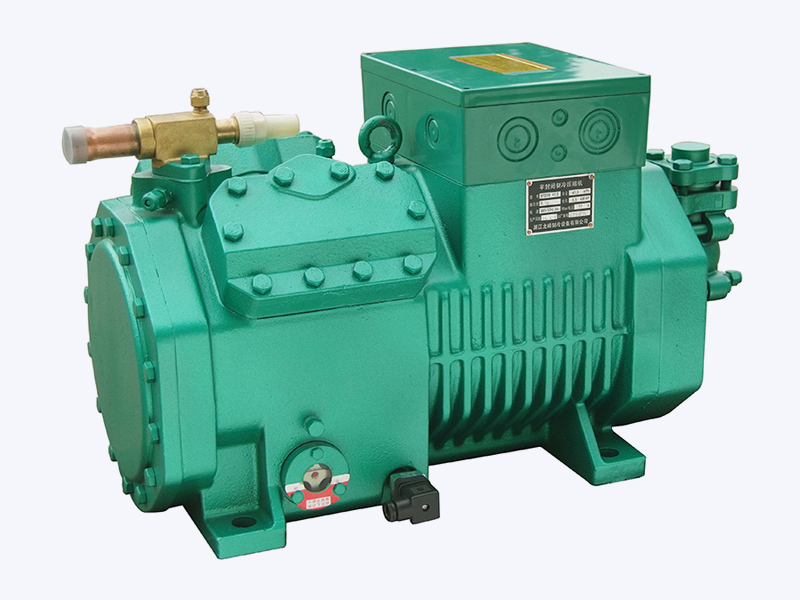
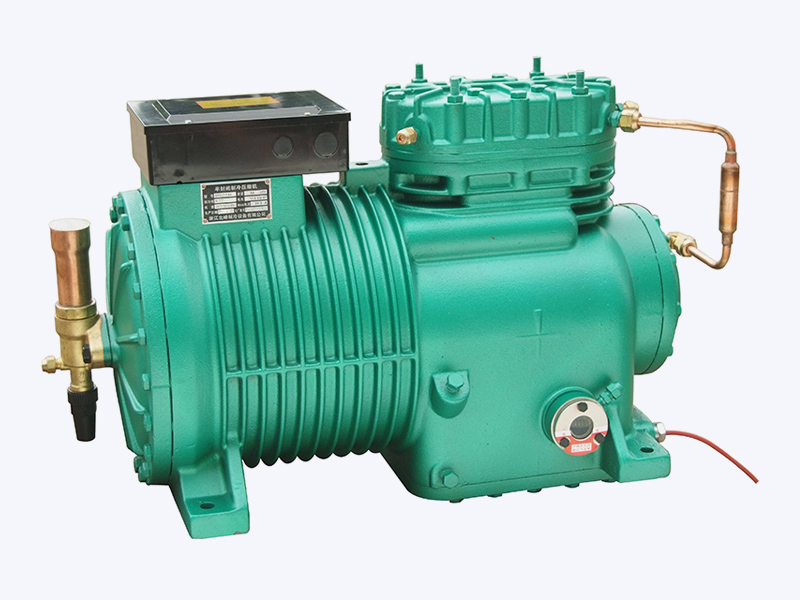
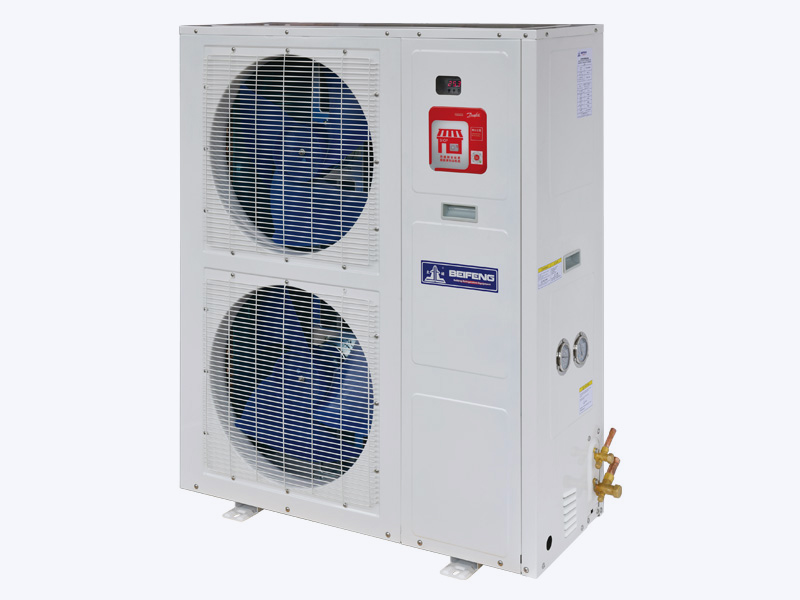
An air cooler never works alone. The condensing unit must be selected against the same evaporating temperature, otherwise the coil is either starved of refrigerant or flooded. Our matching air-cooled condensing units are built around semi-hermetic compressors and pair naturally with unit coolers in the same load range.
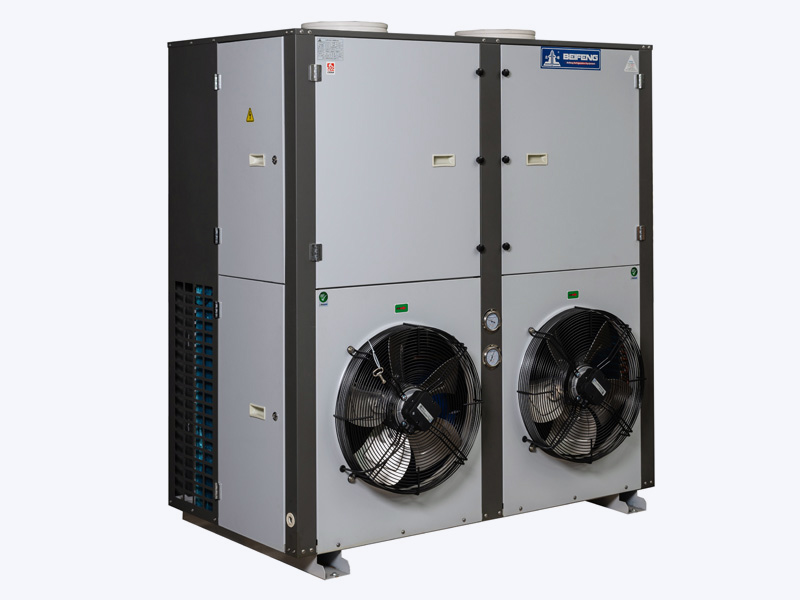
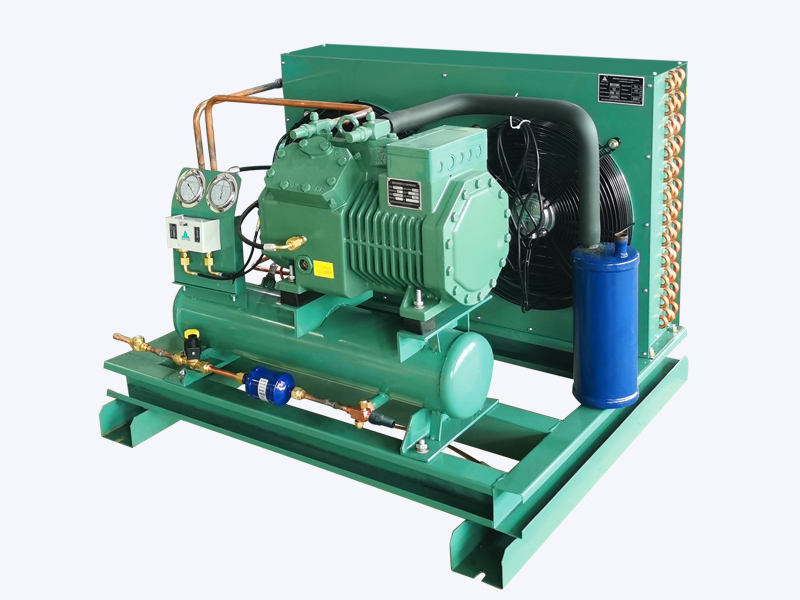 Wholesale Semi-Hermetic Compressor Air-Cooled Condensing Unit(3HP-25HP) Factory,Zhejiang Beifeng Refrigeration Equipment Co., Ltd is China wholesale Semi-Hermetic Compressor Air-Cooled Condensing Unit(3HP-25HP) factor...View Product →
Fin Spacing and Defrost Strategy
Fin spacing controls how the unit behaves under frost. A 4 mm pitch is common for chilled rooms above 0°C. Below -18°C, where frost builds quickly, 6 mm or 8 mm spacing extends the interval between defrosts and keeps airflow open. Wide spacing also protects capacity in high-humidity rooms such as vegetable stores.
Defrost can be electric, hot gas, or water. Electric defrost is simple and common on smaller units; hot gas defrost suits larger systems; water defrost appears in industrial plants. The method has to match the coil geometry. In a -25°C freezer, fin spacing is the difference between stable operation and a unit that spends half its life defrosting.
Materials, Air Throw, and Noise
Casing is normally galvanised steel, with stainless steel available for washdown and corrosive environments. Copper tubes with aluminium fins remain the standard coil; all-aluminium coils appear in some lines, but they need compatible corrosion protection with certain refrigerants.
Air throw determines how far the airflow travels before it loses velocity. A unit with a 12 m throw serves a small room; long cold stores with tall racks need 20 to 30 m. In shops and convenience stores, noise is part of the specification, which is why low-noise versions are the norm for retail back rooms.
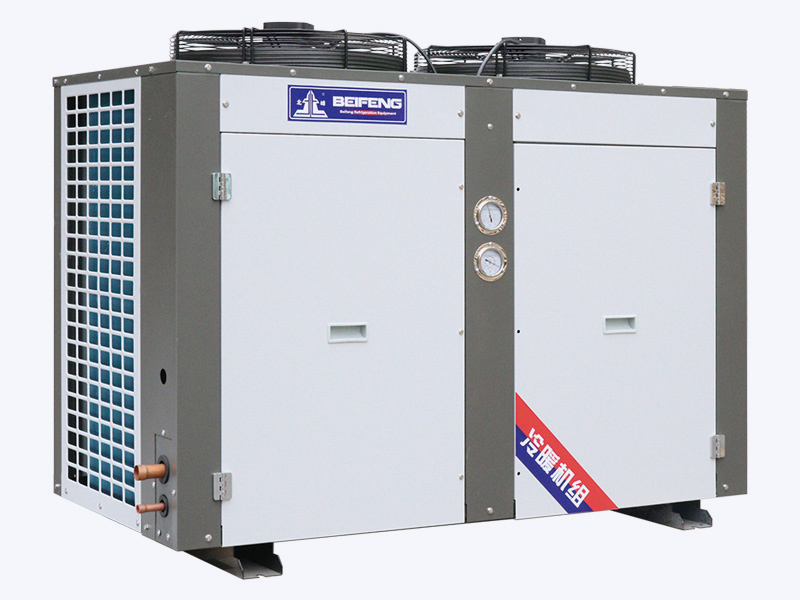
These rules apply whether the cooler ends up in a walk-in freezer, a vegetable ripening room, a blast chiller, or a supermarket stockroom. For retail installations, the air cooler is usually paired with a dedicated condensing unit; the supermarket and c-store condensing units we produce cover chilled and frozen temperature ranges for exactly this purpose.
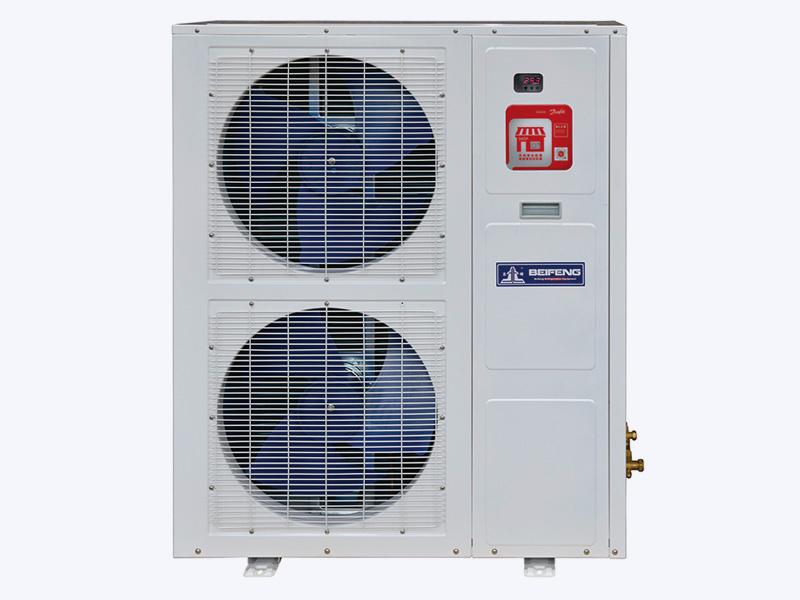 Wholesale Supermarket and C-store Medium Temp/Low Temp Fixed Speed Condensing UnZhejiang Beifeng Refrigeration Equipment Co., Ltd is China wholesale Supermarket and C-store Medium Temp/Low Temp Fixed Speed Condensing ...View Product →
| Parameter | What to check |
|---|---|
| Cooling capacity (kW) | Match to the calculated heat load at the required room temperature |
| Room and refrigerant temperature | Defines evaporating temperature and the compressor match |
| Fin spacing | 4 mm for chilled rooms, 6 to 8 mm for freezers and high humidity |
| Defrost method | Electric, hot gas, or water, matched to coil size and system type |
| Air throw | 12 m for small rooms, 20 to 30 m for warehouses with tall racks |
| Casing and coil materials | Galvanised or stainless casing; copper or aluminium coil |
| Noise level | Low-noise fans for shops, convenience stores, and occupied areas |
Installation and Maintenance Practices
Positioning and Airflow
The most common installation faults are mounting the unit too close to the ceiling or wall and directing the airflow toward the door. Warm air that rushes in every time the door opens hits the coldest surface first and turns into ice. A unit cooler should throw air along the length of the room, with clearance for service access and even distribution across the storage area.
Cleaning and Defrost Control
Fins collect dust that acts as insulation. A dirty coil loses capacity long before the compressor shows any sign of trouble, so cleaning intervals should be set by the environment — a bakery or packing hall needs more frequent attention than a sealed freezer. Check drain heaters before the cold season, verify that defrost terminates at the correct temperature, and listen for bearing noise in fan motors. These few checks cover most reliability issues.
When an Evaporative Air Cooler Makes Sense
To close the loop on the consumer side: if you are choosing an appliance for a home or workshop, an evaporative cooler is suitable when the climate is dry, fresh air is available, and running costs matter more than precise temperature control. It is not a substitute for air conditioning in humid regions or in rooms that must stay closed. If the building is insulated and you need consistent temperatures regardless of outside humidity, a compressor-based system remains the right answer. The two products are not competitors; they serve different conditions.
Buying from a Refrigeration Manufacturer
This selection guidance comes from a manufacturing background, not a trading desk. Zhejiang Beifeng Refrigeration Equipment has built refrigeration components and systems since 1986 from two production bases covering 60,000 square metres. The company holds ISO 9001, CE, UL, and pressure vessel certification, runs an in-house testing centre, and leak-checks coils with a vacuum helium detector. Its products ship to Europe, Southeast Asia, the Middle East, North America, and Africa, and the complete product line covers compressors, condensing units, evaporators, condensers, chillers, and fresh-air units.
The right air cooler starts with the cooling job, not the catalogue. Once load, temperature, and room conditions are defined, the supplier's task is to match the mechanical design to those numbers and stand behind the result. When the site conditions are known, speak directly with our sales engineering team and you will get a recommendation based on the real application, whether that is a retail cold room or a large warehouse.
The name is shared, but the specification never is.
.jpg?imageView2/2/w/300/h/300/format/webp/q/75)