 English
 عربى
عربى 简体中文
简体中文
Condenser Selection Guide
Air-Cooled Condenser vs. Regular Condenser: Which One Belongs in Your Refrigeration Project?
Air moves heat for free; water moves it more efficiently - if you can pump it, treat it, and maintain it. Here is how the two condenser types really compare on cost, space, and long-term reliability.
Two quotations land on the desk for the same cold-room project. One specifies an air-cooled condensing unit that rejects heat straight into the outdoor air; the other specifies a "regular" condenser - which, in almost every catalog, means a water-cooled model - that moves heat through a water loop and a cooling tower. The price gap is obvious on page one; the differences that decide running cost and service workload appear much deeper in the documents.
The short answer comes first. For most cold rooms, supermarkets, and convenience stores, the air-cooled condenser is the better default: no water supply, no tower, no treatment chemicals, and maintenance that fits into a single afternoon. The water-cooled condenser earns its complexity when condensing efficiency, compact size, or an indoor machine room matters more than plumbing - typically in high-ambient regions and larger industrial duties. We have built both formats at Beifeng since 1986 and still quote them side by side, because the honest answer depends on the site, not the catalog.
What "Regular" Actually Means in the Catalog
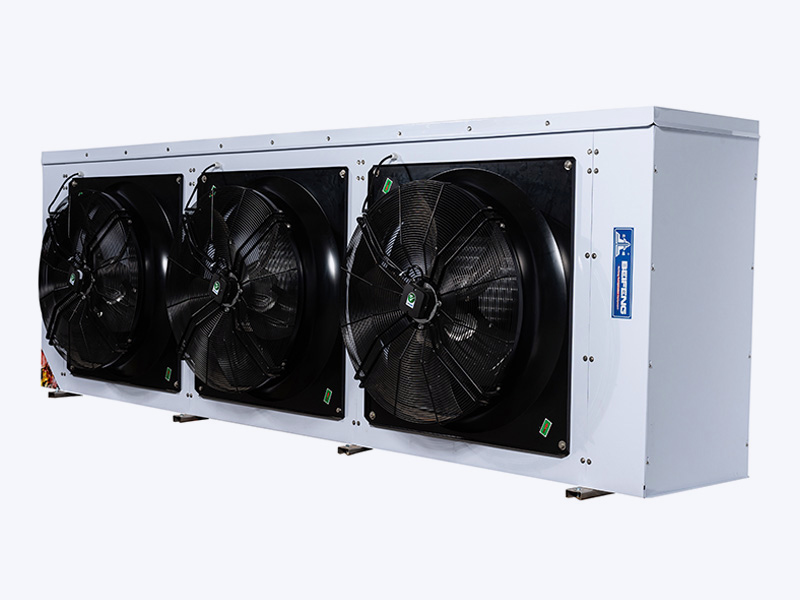
The word "regular" hides a technical decision. In refrigeration practice it almost always means a water-cooled condenser, usually a shell-and-tube or tube-in-tube heat exchanger in which hot refrigerant gas condenses against moving water. An air-cooled condenser takes the other path: refrigerant condenses inside a finned coil while axial fans force ambient air across the fins. Evaporative condensers blend the two by spraying water over the coil, but they carry their own water-treatment obligations and sit outside this comparison.
The structural difference leads to a more important one: where the heat finally goes. An air-cooled condenser finishes the job in place, passing heat from refrigerant to fin to air. A water-cooled condenser only hands the heat to water; a cooling tower, dry cooler, well, or process stream must then reject it elsewhere. Any fair comparison has to price in that second half of the loop.
How the Physics Sets the Performance Gap
Water absorbs roughly four times more heat per kilogram than air for the same temperature rise, which is why a water-cooled condenser can be strikingly compact for a given duty. On a 35°C afternoon, an air-cooled condenser typically condenses 10 to 20 K above the ambient air, so head pressure climbs exactly when the compressor is already working hardest. A tower-water circuit holding close to the local wet-bulb temperature keeps the condensing temperature noticeably lower, and lower head pressure means less compressor energy on every running hour.
The advantage is real but never free. Tower fans, circulating pumps, water makeup, and treatment chemicals all draw power and budget, so the system-level comparison is closer than condensing temperatures alone suggest. In mild climates with moderate load hours the air-cooled unit frequently wins on total energy; in hot regions with long cooling seasons and well-managed water, the water-cooled system usually pulls ahead.
The Specification Differences at a Glance
Before the deeper trade-offs, the table below collects the differences that decide most purchases.
| Aspect | Air-Cooled Condenser | Regular (Water-Cooled) Condenser |
|---|---|---|
| Cooling medium | Ambient air forced across a finned coil | Circulating water from a tower, well, or process loop |
| Condensing temperature | Typically 10 to 20 K above design ambient | Tracks cooling-water temperature, generally lower at the same site |
| Water consumption | None | Continuous makeup plus treatment and blowdown |
| Installation | Outdoor placement with airflow clearance | Indoor unit plus tower, pumps, and pipework |
| Routine maintenance | Coil cleaning and fan checks | Water-quality control, tube cleaning, tower service |
| Noise profile | Fan noise at the unit | Quieter unit; noise shifts to pump and tower |
| Typical failure risks | Fouled fins, hot-air recirculation | Scaling, corrosion, biological growth |
| Best fit | Cold rooms, retail refrigeration, water-scarce sites | High-ambient plants, indoor machine rooms, larger duties |
Where the Air-Cooled Condenser Is the Right Default
Air-cooled condensers dominate commercial refrigeration for practical reasons rather than fashionable ones.
- No water infrastructure: no tower, no pumps, no piping, no water bill, and no winter freeze-protection work on a tower.
- Simple ownership: keep the fins clean, keep the airflow clear, and check fan motors and electrical connections on a schedule.
- Package convenience: compressor, coil, and fans arrive as one tested condensing unit, which shortens installation and commissioning.
- Water-scarce regions: across much of the Middle East, Africa, and Southeast Asia - markets we export to - removing the cooling-water dependency is often the deciding factor.
Info: Airflow is part of the specification. Keep the manufacturer's stated clearance on every air-inlet face, and avoid walls or louvers that let discharged air recirculate into the intake; recirculated hot air raises head pressure faster than a fouled coil does.
Success: For a unit in this class, a seasonal coil wash plus a fan and electrical check is usually the entire preventive maintenance plan.
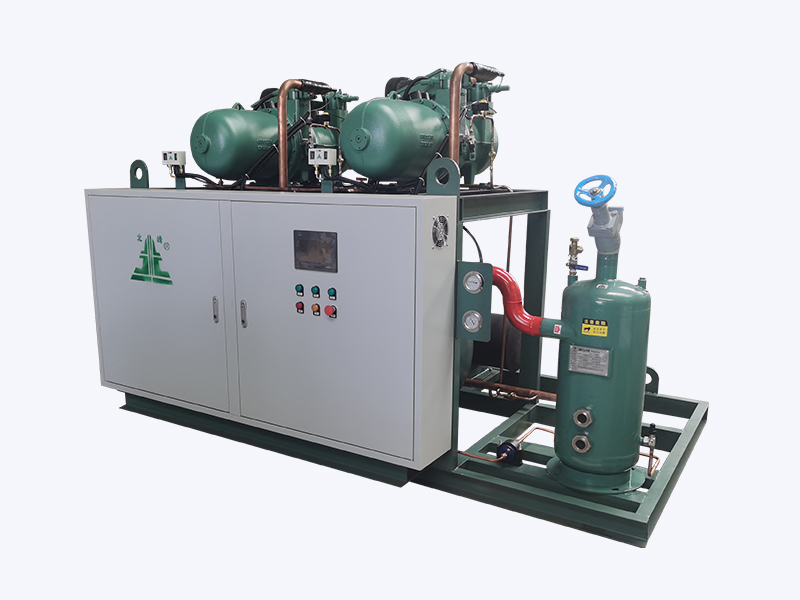
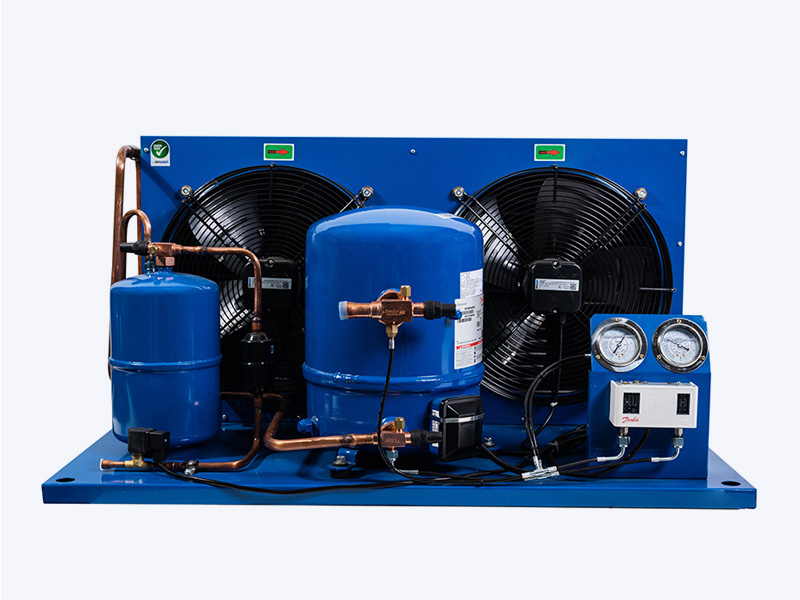
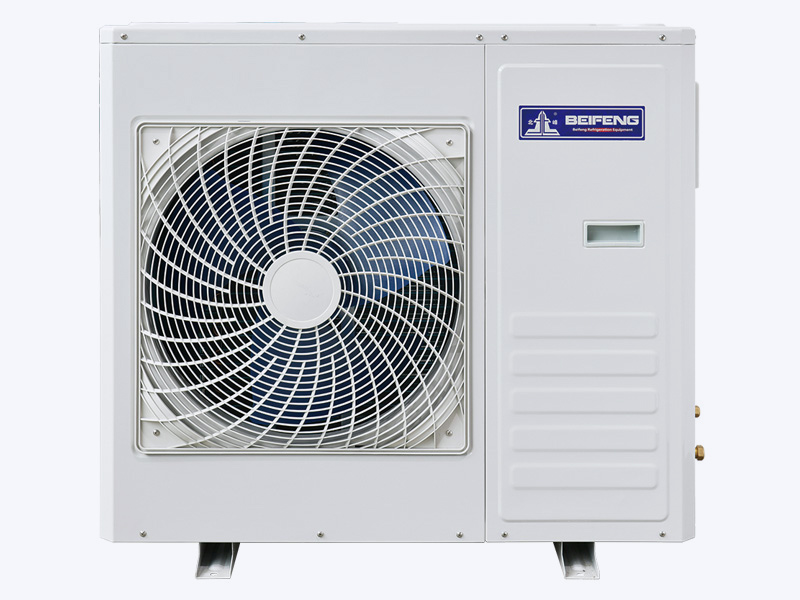
Our semi-hermetic air-cooled condensing units follow exactly this logic: packaged, leak-tested with helium on the coil side, and sized for supermarket and cold-room duties.
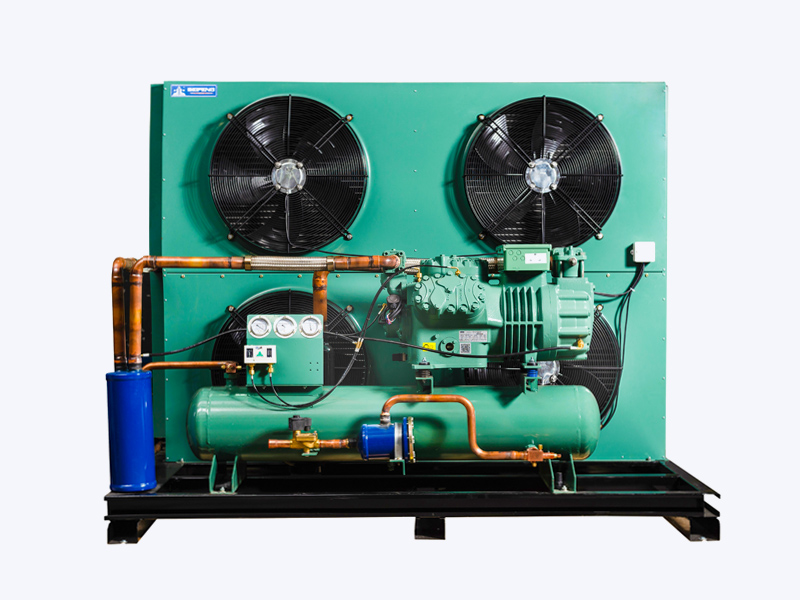
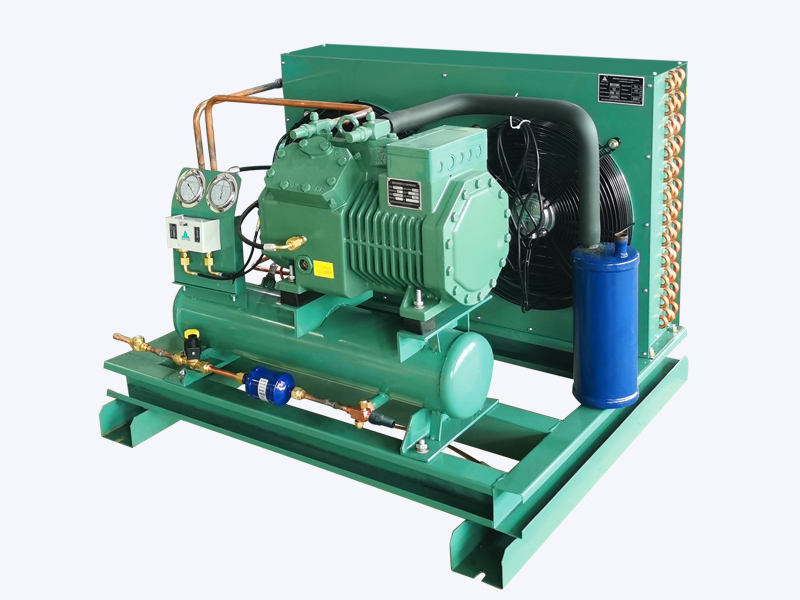 Semi-Hermetic Air-Cooled Condensing Unit (3HP-25HP)A packaged semi-hermetic condensing unit sized for supermarket and cold-room duties, helium leak-tested on the coil side and compatible with multiple refrigerants, suited where air-cooled heat rejection remains practical.View Product →
Where the Regular Water-Cooled Condenser Still Wins
The water-cooled design pays for its complexity in three situations. First, high-ambient regions: as design temperatures approach 40°C, an air-cooled coil fights a losing arithmetic while tower water keeps condensing pressure manageable. Second, indoor machine rooms: a shell-and-tube condenser is compact and quiet, and heat leaves through pipes rather than a wall louvre. Third, larger industrial duties, where the efficiency difference across thousands of running hours outweighs the added loop.
Construction quality matters here. Our shell-and-tube water-cooled condensers are manufactured under our pressure-vessel production license, and paired with a semi-hermetic water-cooled condensing unit they form the backbone of many industrial and process installations.
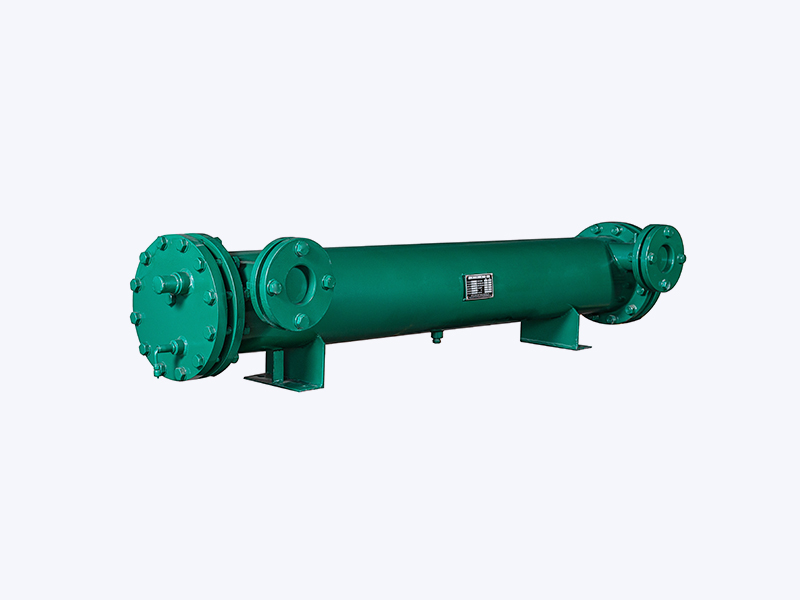
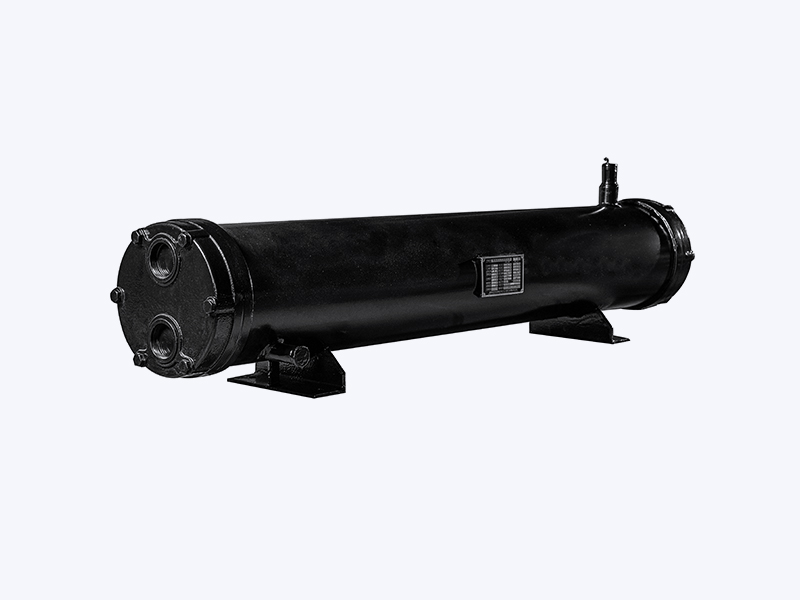 Shell and Tube Water-Cooled CondenserA shell-and-tube heat exchanger produced under a pressure-vessel manufacturing license, designed for water-side heat rejection and widely used in industrial and process refrigeration installations.View Product →
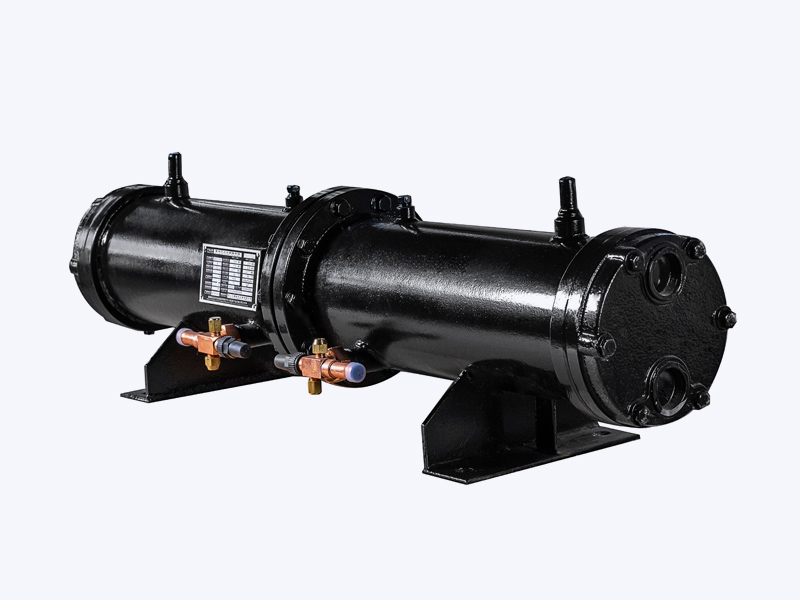
 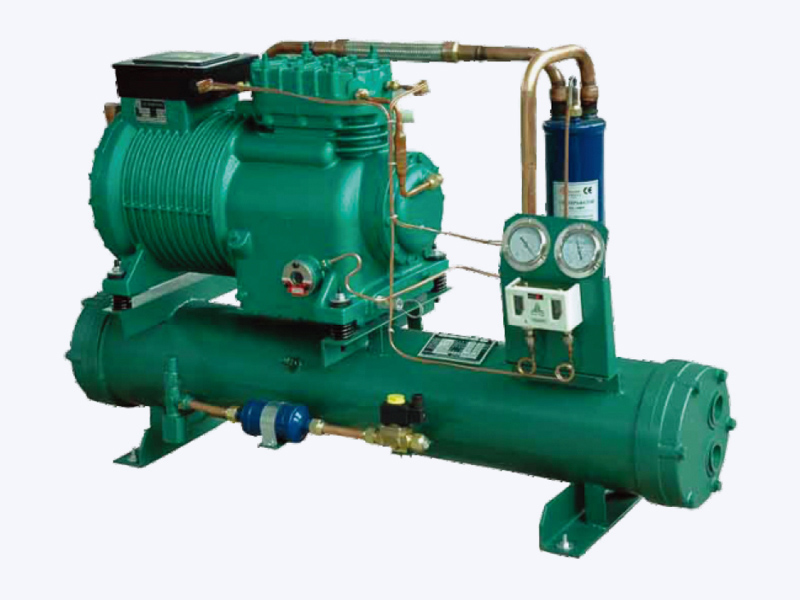 Semi-Hermetic Water-Cooled Condensing UnitPaired with a shell-and-tube condenser, this unit forms the backbone of industrial systems, using multiple refrigerants and built with oil separation, pressure controls, and vibration-reducing design.View Product →
Warning: Scaling is the quiet capacity thief. A thin mineral film on tube walls insulates the heat-transfer surface and shows up first as longer compressor run times; water hardness, pH, and biocide levels need routine testing from the first week of operation.
Danger: Never run the compressor against a condenser without a proven water-flow switch. Dry tubes can deform or split within minutes, and the damage reaches well beyond the condenser itself.
Counting the Cost You Will Actually Pay
Purchase price is the smallest number in this comparison. Air-cooled systems concentrate their cost at installation and stay inexpensive afterward; water-cooled systems spread cost across pumps, tower upkeep, water, and chemicals for the life of the plant. Which total is lower depends on load hours, local water cost, and maintenance discipline - assumptions worth auditing before the purchase order is signed, not after.
Service life follows the same logic. With water treatment properly maintained, a water-cooled condenser can match or outlast an air-cooled equivalent, and our overview of how service life compares when water treatment is maintained walks through the failure modes in detail. Neglect the treatment and the calculation reverses within a few seasons.
Size the condenser for the hottest week of the year, not the average afternoon - the afternoons that decide your energy bill will find it either way.
A Six-Point Checklist Before You Sign
- Map your water reality: supply cost, hardness, drainage, and whether a tower already exists on site.
- Fix the design ambient temperature honestly - the worst realistic week, not the average afternoon.
- Decide where the equipment lives: outdoors with airflow, or an indoor machine room with water available.
- Price energy over the real load profile, including tower fans and pumps for any water-cooled option.
- Audit your maintenance capability before accepting water-treatment obligations.
- Compare complete condensing units rather than bare condensers, so fan, pump, and control costs stay visible.
The Bottom Line
Neither condenser is obsolete; each is specialized. Air-cooled is the practical default for most commercial refrigeration: it removes water from the equation, keeps maintenance simple, and installs almost anywhere with airflow. The regular water-cooled condenser is the efficiency play for buyers who can commit to water quality - and in the right climate it repays that commitment for years.
If you are weighing a specific project, send us the design ambient temperature, refrigerant, and duty profile, and our engineers will recommend the format that fits the site rather than the one that is easiest to quote. You can reach the team through our contact page.