 English
 عربى
 简体中文

Air-Cooled Condenser Fan Control: Set Head Pressure, Protect the Compressor
A supermarket condenser can sound calm at midnight and still be damaging the compressor. The fans cycle on a pressure switch, the gauge looks reasonable, and the store holds temperature. But if head pressure falls too low for too long, expansion-valve feed weakens, subcooling drops, and the compressor later shows liquid migration or oil-return problems.
Fan control on an air-cooled condenser is not a fan-speed exercise. It is head-pressure management. The useful question is not whether the fans cycle or run continuously, but what minimum head pressure the system must hold—and what deadband keeps it there without hunting.
Start with the result: minimum head pressure and stable subcooling
Fan control changes heat rejection by changing airflow. As airflow rises, condensing pressure falls; as airflow drops, pressure rises. A pressure switch, electronic head-pressure controller, or VFD is simply trying to keep condensing pressure inside a useful band as ambient and load change.
The target is not one gauge reading. It is enough pressure differential for oil return and valve operation, enough liquid subcooling to feed the expansion device, and enough reserve to avoid high-pressure trips on a hot afternoon.
Info. A fan controller that keeps the gauge steady but lets subcooling drift below the manufacturer’s range is not solving the problem. It is moving instability downstream.
That is why setpoints should be commissioned against the unit’s operating envelope—not copied from a similar-looking unit. Refrigerant, coil volume, fan motor type, receiver size, and low-ambient accessories all change the acceptable pressure band.
Fan cycling, variable speed, and floating head pressure
Three control families dominate small and mid-sized air-cooled condensing units. They are often combined: cycling for on/off fans, variable speed for a lead fan, or an electronic controller for both.
| Strategy | How it works | Good fit | Watch for |
|---|---|---|---|
| Pressure switch cycling | Starts and stops fans at set pressures | Simple single- or two-fan units | Setpoint drift and short cycling |
| Electronic head-pressure control | Pressure transducer stages fans or sends a signal | Tighter low-ambient control | Sensor placement and fail-safe settings |
| VFD or ECM | Fan speed follows pressure or temperature | Noise-sensitive sites and floating head | Minimum speed and motor cooling |
| Floating head pressure | Controller lowers condensing pressure with ambient | Energy-focused plants | Oil return and valve feed at minimum lift |
Fan cycling: still useful, but the details matter
A fan-cycling pressure switch is still a sound choice for many single-fan or two-fan condensers. It closes on rising head pressure and opens on falling pressure. The practical details are cut-in, cut-out, and differential: too narrow causes short cycling, too wide lets pressure swing before the fan responds.
Warning. A switch setting that works in mild weather can become unstable at low ambient. Check fan-motor start frequency, contactor wear, and pressure recovery after a fan stops. A 20–30 psi differential is a common field starting point, but the unit’s instructions and refrigerant remain the authority.
With multiple fans, stage them rather than cycling all fans together. A lead fan plus stepped fans smooths pressure control and avoids an audible bank of simultaneous starts. On a two-fan unit, confirm whether the second fan is for low-ambient control or only high-load rejection; the wiring and switch setting are not always interchangeable.
Variable speed and floating head pressure
VFDs and electronically commutated motors help where fan cycling is noisy, ambient swings are wide, or the owner wants lower condensing pressure in cool weather. A variable-speed fan can hold a tighter band and reduce compressor lift, but it has a minimum-speed limit. Below that speed, motor cooling or airflow can become unreliable.
Floating head pressure goes further: instead of a fixed setpoint, the controller lets head pressure follow ambient down to a safe minimum. Energy savings come from reduced compressor lift, not from the fan alone. The risk is setting that minimum too low for oil return, liquid-line subcooling, or expansion-valve operation.
Success. A well-commissioned floating control holds subcooling through a cold snap, avoids aggressive unloading, and prevents the low-pressure trip that often follows a minimum-head setting pushed too far.
When fan control is built into a matched condensing unit
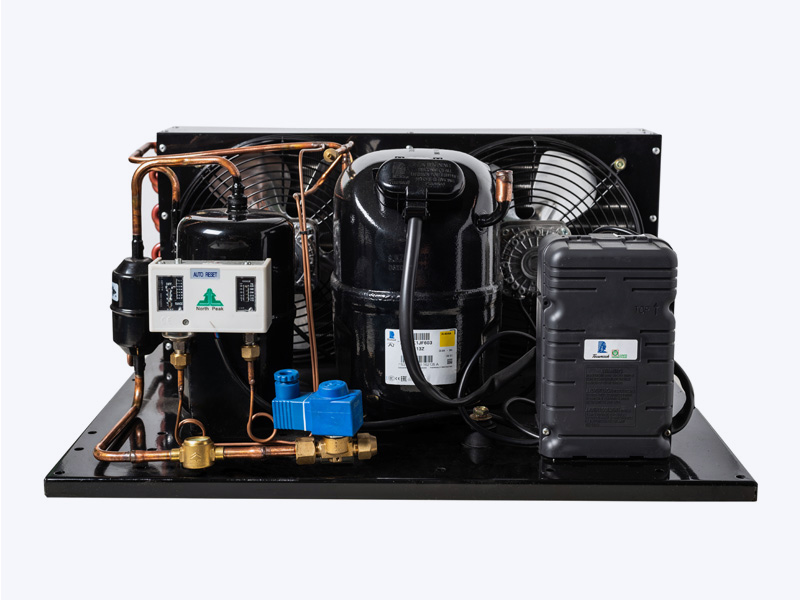
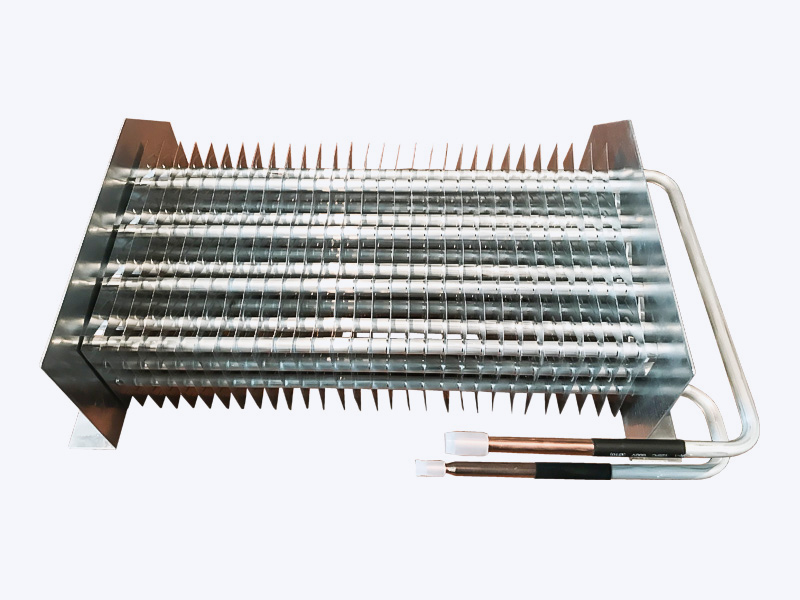
Packaged air-cooled condensing units are easier to commission when fan control, receiver, and compressor protection are designed as a system. Still verify factory charge, fan staging, and low-ambient strategy against the actual climate and load profile. Airflow matters too: a restricted coil or recirculating hot air can make a correctly set pressure switch look faulty. For how coil and fan geometry affect heat rejection, see this note on condenser design and airflow.
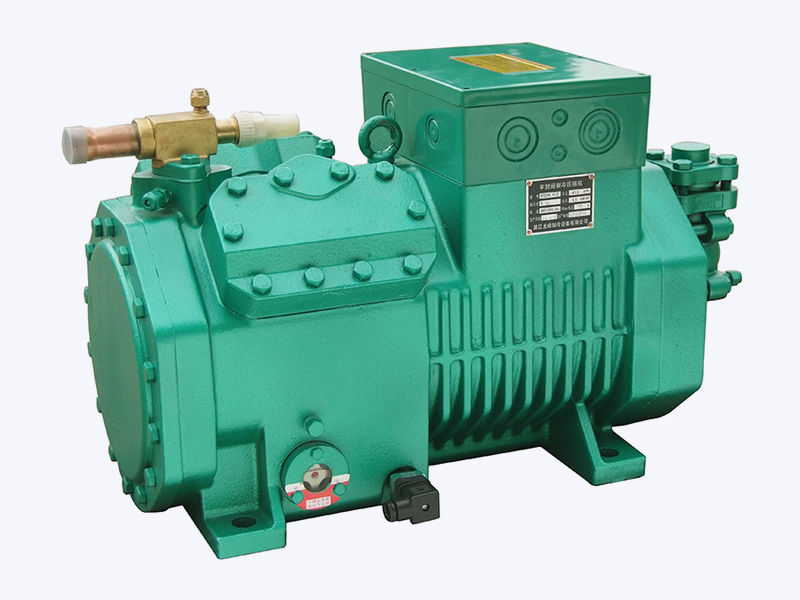
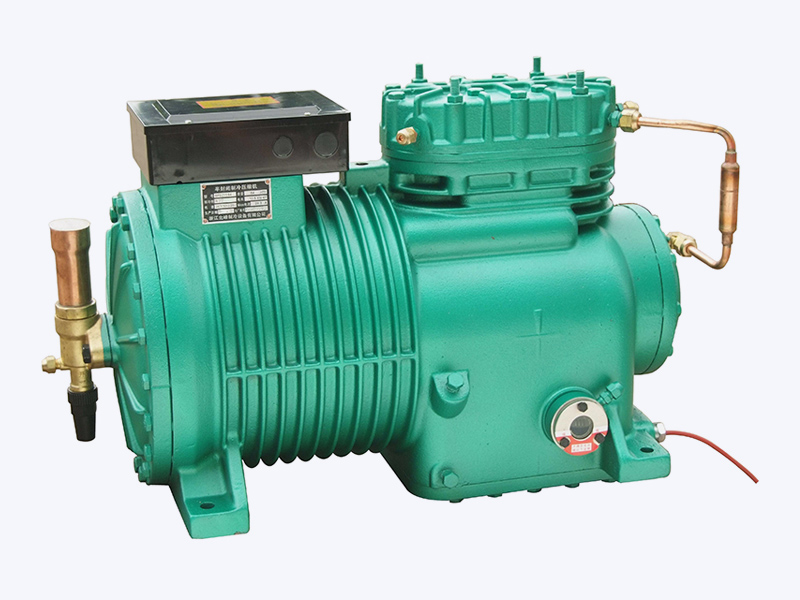
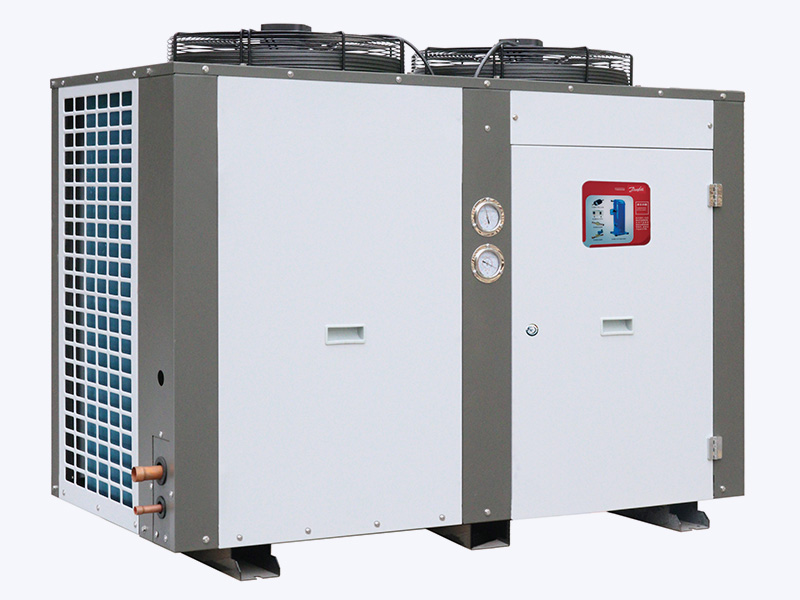
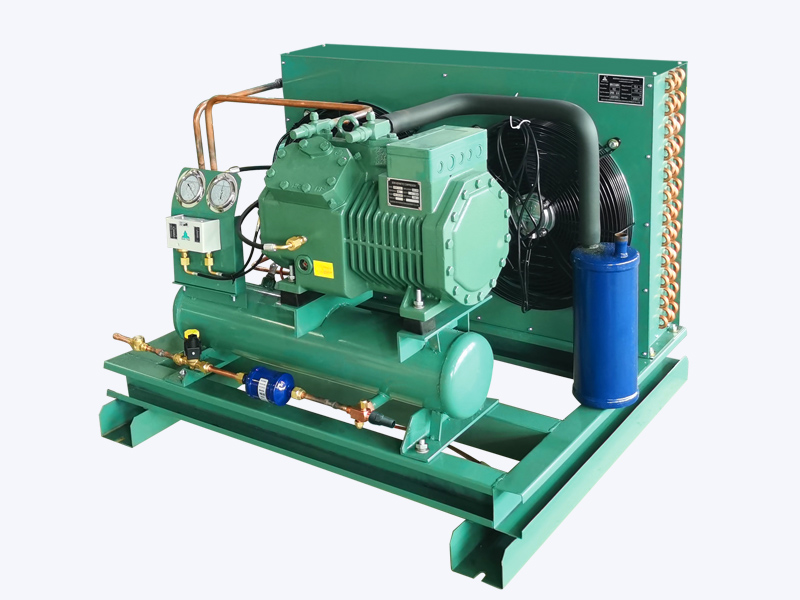 Semi-Hermetic Air-Cooled Condensing Units, 3HP–25HPBFB-FJZ units include semi-hermetic compressors, receivers, pressure controls, and capacity tables for R22, R134a, R404A, and R407C, supporting system-level selection.View Product →
Compare fan motor type, fan count, and controller interface before accepting a lowest-price unit. EC fans and an adjustable pressure band may cost more up front, but they can cut winter service calls where temperature swings are wide.
Commissioning checks that expose weak fan control
Prove fan control at three conditions: design ambient, a mild day, and the coldest expected night. Record condensing pressure, subcooling, compressor current, and time between stages. The pattern matters more than a single snapshot.
- Confirm the pressure switch or transducer matches a calibrated gauge at the condenser.
- Run a forced shutdown and watch whether fans stop in the intended order.
- Verify that minimum head pressure still produces stable subcooling and oil return.
- Check fan rotation, motor current, and contactor condition after repeated cycles.
Danger. Do not “fix” a low-head-pressure complaint by raising the fan cut-in until the fans run continuously. That can mask a blocked coil, a failed fan motor, or an overcharge. Diagnose the cause before changing the deadband.
Supermarket and convenience-store condensing units
Retail refrigeration must balance acoustics, energy, and product safety. A medium-temperature supermarket condensing unit may run near its envelope on a summer afternoon, then face a quiet, low-load night. Inverter-driven units can reduce fan and compressor cycling, but controls must still respect minimum condensing pressure for expansion valves and oil return.
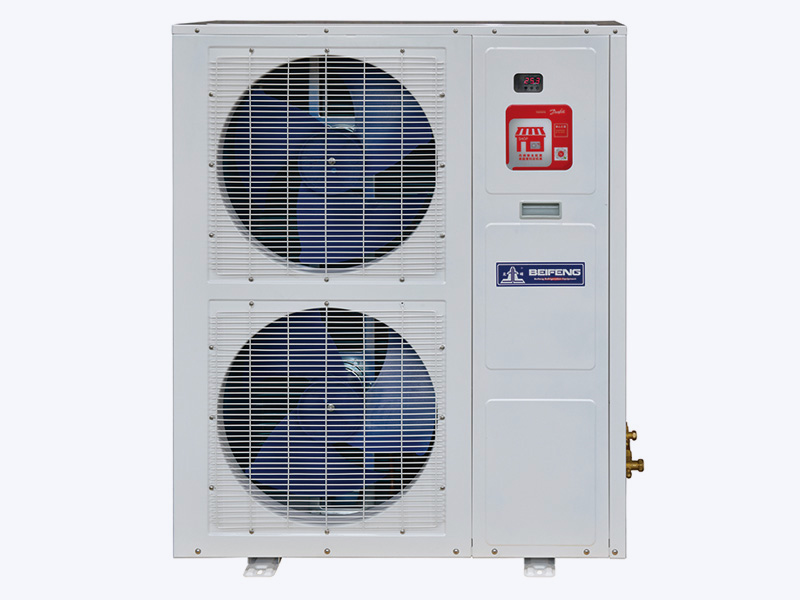
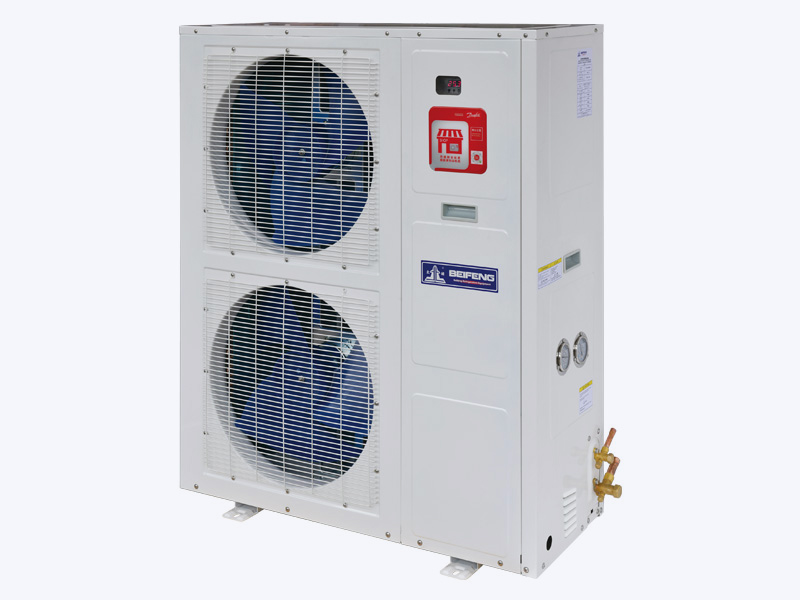 Supermarket Medium-Temperature Inverter Condensing UnitsDanfoss inverter scroll compressor, adjustable-speed fan, sound-insulated enclosure, and seven models help address quiet low-load operation and reduced cycling in retail refrigeration.View Product →
Listen at the quietest time of day during commissioning. A strategy that sounds acceptable at noon can be intrusive at 2 a.m. Staging delays, lower peak fan speed, and a properly sized condenser matter more than one “quiet mode” setting.
Larger systems: staged fans and screw-type condensing units
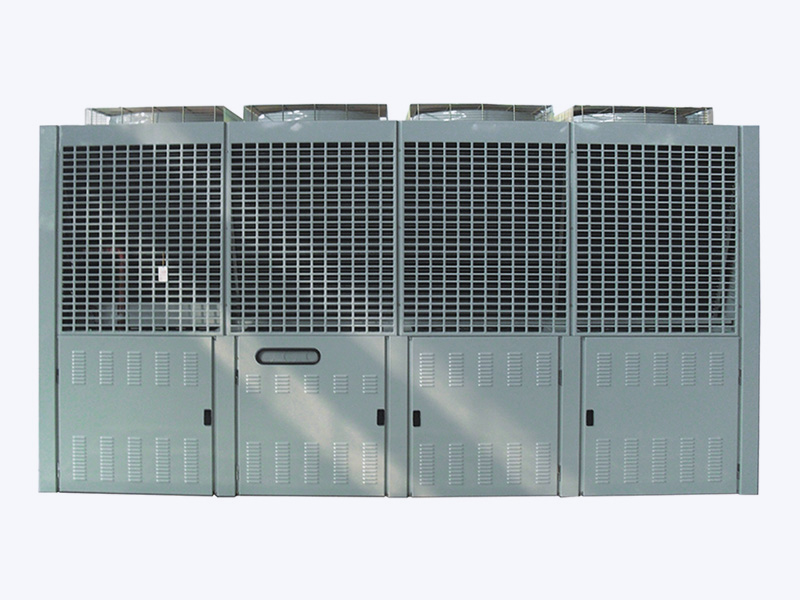
As capacity rises, fan control becomes a staging problem. A screw-type condensing unit with several fans may use a combination of on/off stages and one modulating fan. The controller should avoid simultaneous starts, respect minimum run times, and rotate lead fans where the hardware allows. Pressure transducers need checking against a gauge because a drifted sensor can shift every stage without any obvious symptom.
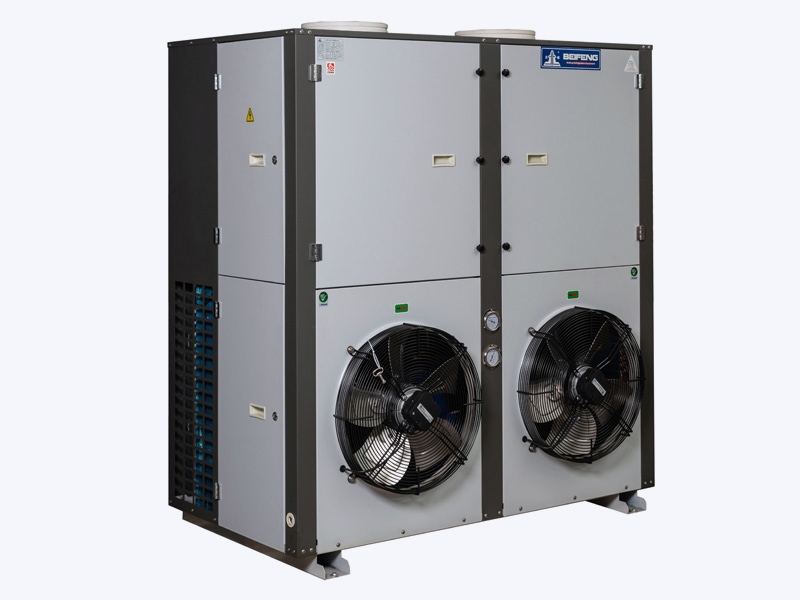
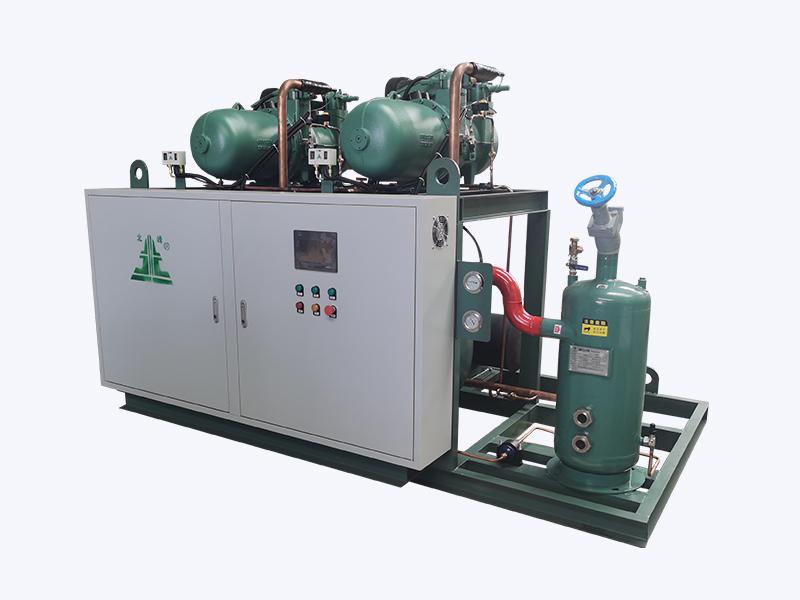 Screw-Type Single and Paralleled Condensing UnitsCovers high-, medium-, and low-temperature single or paralleled units with multi-level capacity control, brand-name screw compressors, and capacity tables for staged refrigeration systems.View Product →
Procurement questions that prevent callbacks
When specifying or replacing an air-cooled condenser, ask for more than fan quantity and motor voltage. Request the factory fan-control sequence, minimum condensing pressure or temperature, recommended deadband, and low-ambient accessory list. Confirm whether the controller accepts a remote pressure signal or only a local sensor. Confirm motor type, because a VFD-ready motor and a standard permanent-split-capacitor motor are not interchangeable.
- What is the minimum head pressure for this refrigerant and compressor combination?
- Does the control stage fans by pressure, temperature, or an external signal?
- What happens on sensor failure—do fans fail on, off, or stage manually?
- Is the receiver sized for the winter charge and the low-ambient strategy?
Success. A clear fan-control sequence in the submittal is cheaper than a winter callback. If it is missing, ask for it in writing before shipment.
For application support on air-cooled condensing units and cold-weather fan control, contact our application team with refrigerant, design ambient, load profile, and available electrical supply.
The control objective, in one line
Hold the lowest head pressure that still protects oil return, valve feed, and subcooling—then prove it at the coldest ambient the site will see.
Fan cycling, variable speed, and floating head pressure are tools for reaching that objective, not ends in themselves. The best fan control is the one that keeps pressure stable, avoids unnecessary starts, and leaves enough information in the controller for the next technician to understand what it is trying to do.