 English
 عربى
عربى 简体中文
简体中文
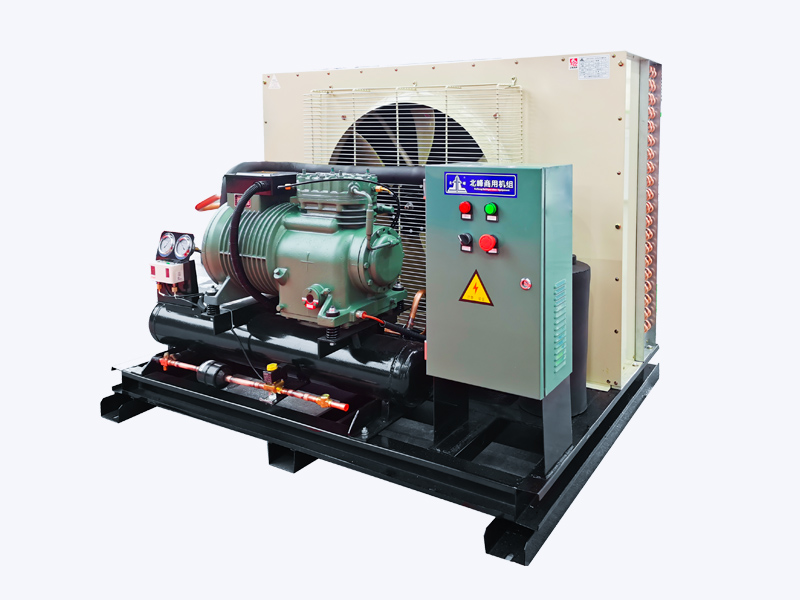
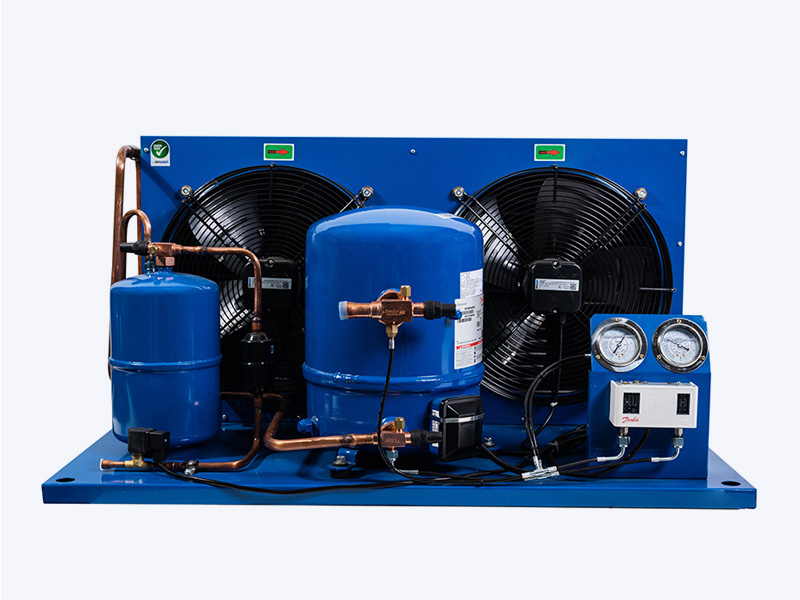
When comparing vibration levels, a Screw-Type Condensing Unit produces significantly lower vibration than a reciprocating condensing unit — typically generating vibration velocities of 2–4 mm/s RMS, compared to 8–15 mm/s RMS commonly measured on reciprocating models under equivalent load conditions. This difference has direct consequences for installation requirements, equipment longevity, noise control, and overall operating costs. If vibration management is a priority in your facility, the screw-type design holds a clear and measurable advantage.
Why Compressor Design Drives Vibration Differences
The root cause of vibration differences lies in the mechanical motion of each compressor type. A reciprocating condensing unit uses pistons that move back and forth in a linear cycle. This reciprocating motion creates strong periodic impulse forces — particularly at top dead center and bottom dead center — which propagate through the compressor housing and into the surrounding structure. These impulses repeat at high frequency and are difficult to fully isolate.
A Screw-Type Condensing Unit, by contrast, uses a pair of interlocking helical rotors that turn continuously in one direction. There are no pistons, no valves opening and closing under pressure, and no sudden directional reversals. The rotary motion is inherently smooth and self-balancing. This is why screw compressors are described as having rotary dynamic balance, while reciprocating compressors are characterized by unbalanced inertial forces.
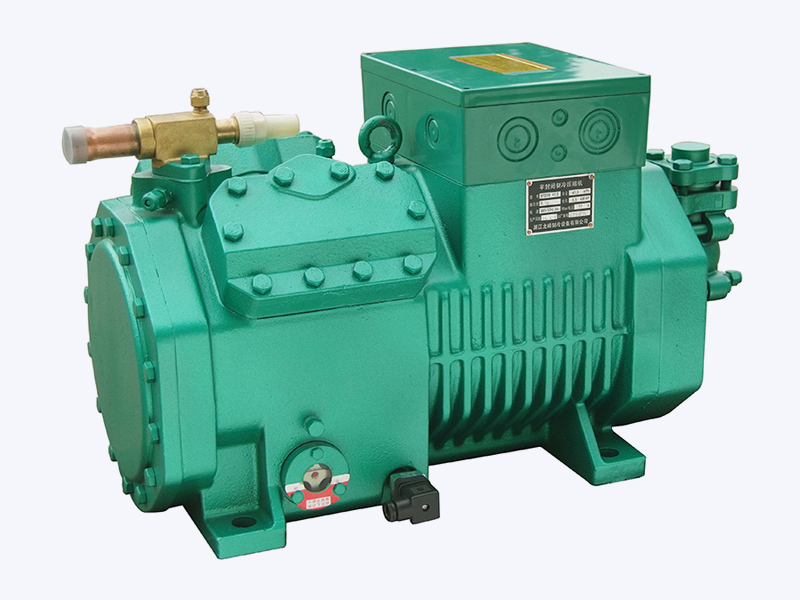
In units that also incorporate a semi-hermetic compressor configuration, the compressor motor and rotating assembly are enclosed within a common sealed housing, which further reduces the transmission of mechanical vibration to the external casing and pipework.
Vibration Level Comparison: Key Data
The following table summarizes typical vibration characteristics under normal full-load operation for both unit types across common capacity ranges:
| Parameter | Screw-Type Condensing Unit | Reciprocating Condensing Unit |
|---|---|---|
| Vibration velocity (RMS) | 2–4 mm/s | 8–15 mm/s |
| Vibration type | Continuous rotary | Periodic impulse |
| Anti-vibration mount required | Recommended | Mandatory |
| Flexible pipe connections needed | Standard | Essential |
| Structural reinforcement needed | Rarely | Often (rooftop/elevated) |
| Noise level (at 1 m, full load) | 72–80 dB(A) | 80–90 dB(A) |
Impact on Installation Requirements
Higher vibration in reciprocating condensing units creates a more demanding installation environment. Engineers must account for the following when specifying a reciprocating unit:
- Heavy-duty spring or rubber anti-vibration mounts beneath the frame to prevent floor transmission
- Flexible braided hose connections on suction, discharge, and liquid lines to absorb pipe stress
- Increased clearance from walls and adjacent equipment to prevent resonance transfer
- Structural checks on rooftop or elevated platforms, where dynamic loading must be assessed
For a Screw-Type Condensing Unit, standard anti-vibration pads are generally sufficient. The lower vibration output also makes screw-type units far more suitable for installation on upper floors of commercial buildings, in proximity to occupied spaces, or in environments where vibration-sensitive equipment is nearby — such as laboratory facilities, data centers, or food processing plants.
How Vibration Affects Long-Term Reliability
Excessive mechanical vibration is one of the leading causes of premature component failure in refrigeration systems. In a reciprocating condensing unit, repeated impulse loads accelerate wear on several critical components:
- Pipe fatigue cracks — particularly at brazed joints and elbows near the compressor discharge
- Valve wear — suction and discharge valves in reciprocating compressors are subject to constant mechanical stress
- Bearing fatigue — crankshaft and connecting rod bearings degrade faster under cyclic loading
- Fastener loosening — bolted connections on the frame and electrical terminals can vibrate loose over time
In a Screw-Type Condensing Unit, the absence of reciprocating masses means these failure modes are largely eliminated. The main wear points are the rotor bearings and shaft seals, which under normal lubricated conditions have a service life of 40,000–80,000 operating hours before requiring inspection — approximately double the overhaul interval typical of comparable reciprocating units.
Vibration Behavior at Part Load
Vibration characteristics change at part load, and the two unit types behave differently. In a reciprocating condensing unit, cylinder unloading — where certain cylinders are bypassed to reduce capacity — changes the balance of the compressor. This can actually increase relative vibration amplitude at some part-load steps, because the symmetry of piston forces is disrupted.
A Screw-Type Condensing Unit uses a slide valve or variable-speed drive to modulate capacity. With VSD control, the rotational speed decreases proportionally, which generally reduces vibration levels at part load while maintaining smooth, continuous rotation. This makes screw units more predictable and structurally benign across the full operating range — from 25% to 100% load.
Condenser Design and Its Interaction with Vibration
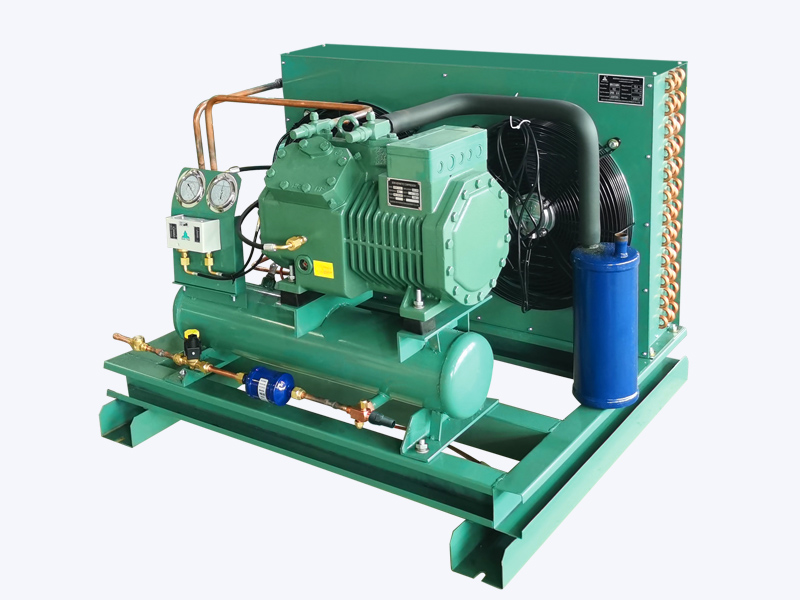
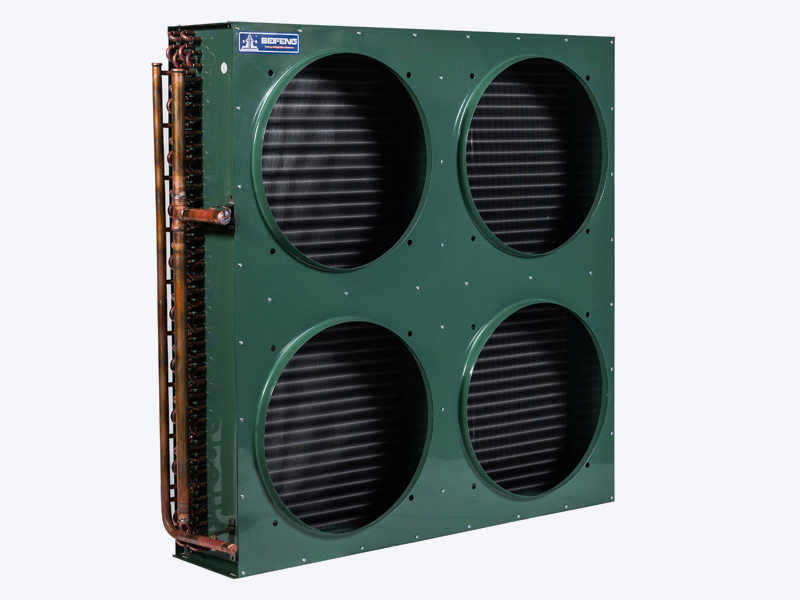
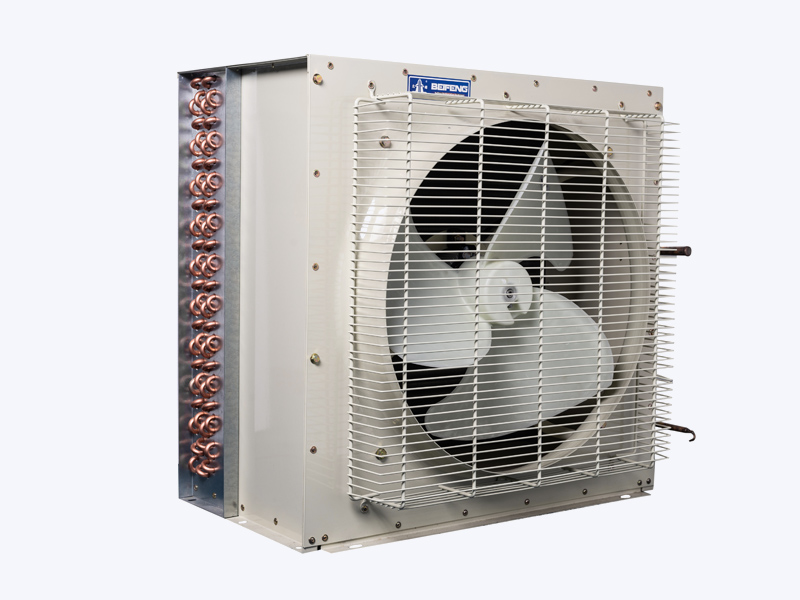
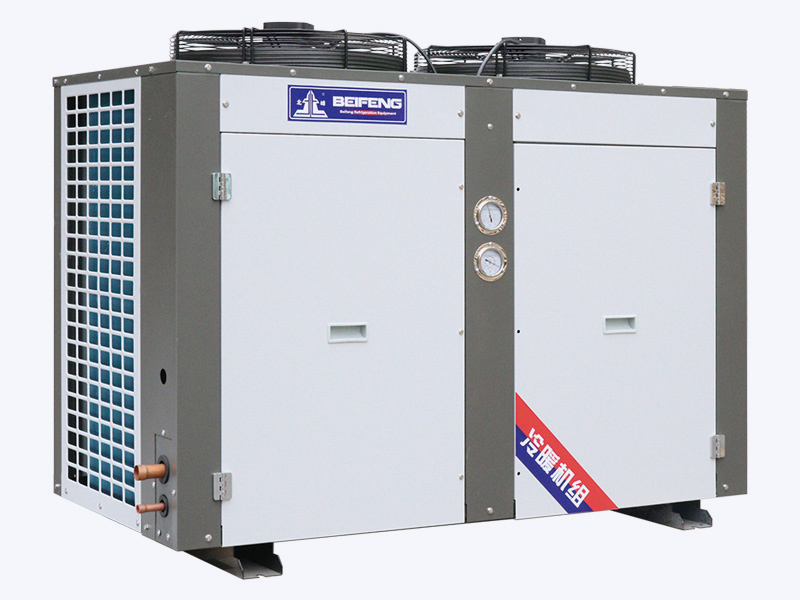
The condenser section of the unit also interacts with compressor-generated vibration. Most outdoor Screw-Type Condensing Units are equipped with an air-cooled condenser, where large-diameter axial fans are mounted above or beside the coil section. Because the screw compressor's vibration output is low and steady, the refrigerant pipework connecting the compressor to the air-cooled condenser coil experiences far less cyclic stress compared to a reciprocating unit.
In reciprocating units with an air-cooled condenser, it is standard practice to install two or more flexible connections between the compressor discharge outlet and the condenser inlet header. Without these, the impulse forces from the pistons can cause hairline fatigue cracks at the brazed joints within 2–3 years of continuous operation — a failure mode rarely observed in screw-type systems.
Noise: A Direct Consequence of Vibration
Vibration and airborne noise are closely linked. The mechanical impulse forces of a reciprocating condensing unit radiate as structure-borne sound, which then emits as airborne noise from the casing, pipework, and supporting frame. This is why reciprocating units tend to produce a characteristically loud, rhythmic knocking sound at full load.
A Screw-Type Condensing Unit produces a higher-frequency continuous tone — often described as a steady whine — which is generally easier to attenuate using standard acoustic enclosures or barrier panels. In urban installations or noise-sensitive zones, screw-type units typically require less acoustic treatment investment to meet local noise ordinances than reciprocating units of equivalent capacity.
For example, a 100 kW reciprocating condensing unit may require a full acoustic enclosure and anti-vibration isolation rails to meet a 65 dB(A) boundary limit at 5 meters. The same capacity Screw-Type Condensing Unit may achieve compliance with only anti-vibration pads and a partial louvered screen — reducing acoustic treatment costs by an estimated 30–50%.
Choosing the Right Unit for Your Application
Vibration level should be treated as a practical selection criterion, not just a technical specification. Use the following guidance:
Choose a Screw-Type Condensing Unit when:
- The unit will be installed on upper floors, rooftops, or in buildings with vibration-sensitive occupants
- Cooling capacity exceeds 50 kW and long continuous operation (20+ hours/day) is expected
- The installation site is subject to local noise or vibration regulations
- Minimizing maintenance downtime and pipe failure risk is a priority
A reciprocating condensing unit may still be appropriate when:
- Cooling capacity is below 20 kW and the unit operates in an isolated, ground-floor plant room
- Budget constraints make the lower upfront cost of a reciprocating unit attractive
- The application involves intermittent operation where vibration fatigue accumulation is limited
The vibration advantage of a Screw-Type Condensing Unit over a reciprocating condensing unit is substantial and well-documented. With vibration velocities typically three to five times lower, screw-type units place less stress on structures, pipes, and components — translating into lower installation costs, fewer maintenance interventions, longer service life, and easier compliance with noise regulations. For medium-to-large capacity refrigeration and air conditioning applications, the lower vibration profile of the screw-type design represents a compelling long-term operational benefit that justifies the higher initial investment.
.jpg?imageView2/2/w/300/h/300/format/webp/q/75)